How to Style a White T-Shirt Five Different Ways

There’s a good chance you own at least one plain white t-shirt right now, and there’s an equally good chance it hasn’t left your “workout or lounge around the house” rotation in months.
That’s a shame, because the plain white t-shirt is quietly one of the most versatile pieces in men’s fashion — the kind of item stylists and editors reach for constantly, not because it’s exciting on its own, but because of everything it can be paired with.
Most men underestimate the white t-shirt for one simple reason: on its own, it looks basic. And it is basic — that’s actually the point.
A plain white tee is a blank canvas, which means its final look depends almost entirely on what you pair it with.
The exact same shirt can look like a lazy Sunday afternoon, a sharp smart-casual outfit, or a genuinely stylish evening look, depending on the pieces built around it.
This guide is going to walk through five distinct ways to style a white t-shirt — from purely casual to noticeably elevated — and explain the actual reasoning behind each combination.
By the end, you won’t just have five outfits to copy.
You’ll understand why each one works, which means you’ll be able to build your own sixth, seventh, and eighth combination using whatever else is already in your closet.
Why the White T-Shirt Works So Well as a Foundation
Before getting into specific outfits, it’s worth understanding why this particular piece punches so far above its price point in terms of usefulness.
It’s a true neutral. White sits at one extreme end of the color spectrum, which means it pairs cleanly with almost every other color without any real risk of clashing.
Navy, black, olive, brown, grey, and even bolder colors like burgundy or mustard all look intentional next to white, because white doesn’t compete with anything — it simply provides contrast and lets the other pieces do the visual work.
It’s texture-neutral too. Because a plain white t-shirt has almost no visual detail of its own, it doesn’t compete with texture-heavy pieces the way a patterned or textured shirt might. This makes it an easy base layer under a chunky knit, underneath an unstructured blazer, or peeking out from under a flannel overshirt.
It’s a proportion tool. A slim-fitting white tee under a looser jacket, or a slightly boxier white tee under a more fitted layer, gives you an easy way to create the fit contrast that makes outfits look intentional, which was covered in earlier guides on outfit-building fundamentals. Because the shirt itself is so simple, you can lean on it to balance whatever else you’re wearing without adding visual clutter.
One mistake I see repeatedly is men treating a white t-shirt as an outfit starting point only for the most casual situations, when it’s actually one of the most flexible pieces you own, precisely because it’s so simple. The five outfits below show just how far that simplicity can stretch.
Read also: How to Dress Sharp on a Tight Budget
A Quick Word on Fit and Fabric Before You Style Anything
Before any of these five combinations will actually work, the t-shirt itself needs to earn its place. A stretched-out, yellowing, overly thin white tee will look tired no matter what you pair it with, and it’s one of the fastest ways to undercut an otherwise well-thought-out outfit.
Fit matters more here than with almost any other piece, because there’s nothing else — no pattern, no print, no interesting cut — to distract from a poor fit. Look for a shirt that sits close to the body without pulling, with sleeves that end roughly mid-bicep rather than sliding down toward the elbow, and a length that hits around the mid-zipper point of your jeans or chinos, not several inches lower.
Fabric weight is worth paying attention to as well. A mid-weight cotton (usually listed somewhere between 180 and 220 GSM if you’re shopping and can check the tag) holds its shape better, drapes more cleanly, and resists show-through far better than the thin, inexpensive tees sold in multi-packs. This is one of those small upgrades that costs relatively little but noticeably changes how “elevated” a plain white tee can look.
Keep two or three in rotation, not just one. White cotton shows wear and yellowing faster than most other colors, so having a small rotation means you’re never reaching for one that’s already past its best days.
With that foundation covered, here are five genuinely different ways to style the same shirt.
Look One: The Classic Casual — White Tee, Dark Jeans, Clean Sneakers
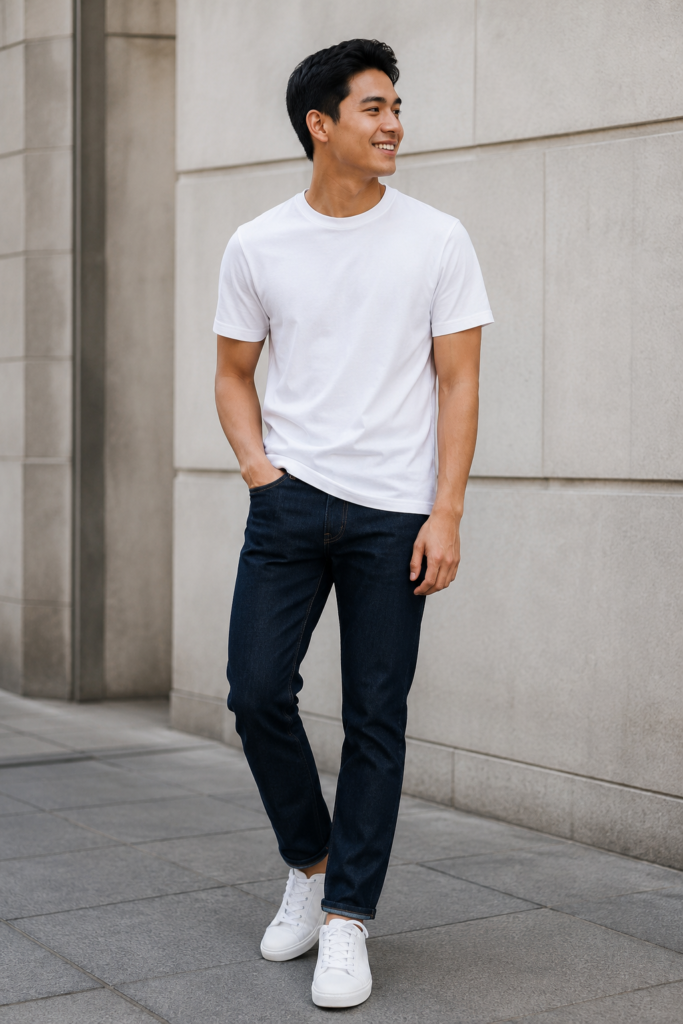
This is the baseline combination, and it’s worth starting here because it’s the version most men already default to — but there’s a right and a wrong way to execute even this simple pairing.
Why it works: This look relies entirely on fit and cleanliness to look intentional rather than lazy, since there’s no layering or added texture doing extra work. A well-fitted white tee tucked in (or a clean French tuck, tucked only in the front) with slim or straight dark jeans and a pair of clean white or minimalist leather sneakers reads as effortlessly put-together, because every individual piece is doing its job well.
Where it goes wrong: The most common failure point here is an oversized, untucked tee paired with baggy jeans and worn-out sneakers — technically the same three categories of item, but executed without any attention to fit, which results in a look that reads as “didn’t think about it” rather than “kept it simple.” This is a good example of how the same basic formula can look either sharp or sloppy purely based on execution.
Small upgrades that elevate this look further: A slightly cropped or cuffed jean hem to show a bit of ankle, a subtle waistband detail from tucking the shirt in cleanly, or swapping standard white sneakers for a slightly more premium leather sneaker all push this simple combination further without changing its fundamentally casual character.
Best for: Weekend errands, casual coffee meetups, a low-key hangout with friends, or a relaxed first date at a casual venue.
Look Two: Layered and Textured — White Tee Under an Overshirt
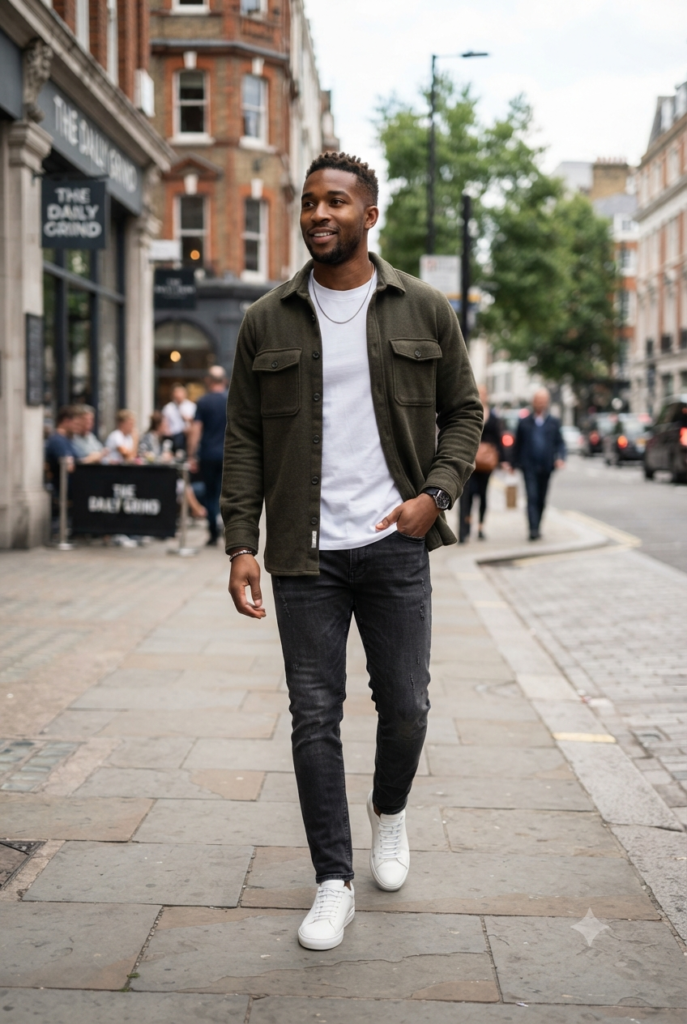
This is where the white t-shirt starts showing its real value as a base layer rather than a standalone piece. Adding an overshirt — flannel, chambray, or a heavier cotton — transforms the same basic tee into part of a more considered, layered outfit.
Why it works: The white tee acts as a clean, neutral base that lets the overshirt’s texture and color take center stage. Since the tee itself has zero pattern or competing detail, it never clashes with whatever pattern or color the overshirt brings — a plaid flannel, a solid chambray, a heavier waffle-knit shirt jacket all layer cleanly over a plain white base without any coordination effort required.
How to wear it correctly: Leave the overshirt unbuttoned, or button just the middle button or two, so a visible strip of white tee shows through the front. This creates the kind of layered visual depth discussed in the fall layering guide — you can see both pieces clearly, rather than the overshirt simply hiding the tee entirely. Roll the overshirt sleeves up to just below the elbow, letting a bit of white tee sleeve show at the cuff, which reinforces that staggered-layer look that reads as intentional rather than accidental.
Pant pairing: Dark jeans or chinos both work well here. If the overshirt has a busier pattern (plaid, in particular), keep the pants solid and simple to avoid competing patterns.
Best for: Cooler weather weekend outings, casual fall or spring days, a laid-back dinner with friends, or a coffee shop work session where you want to look put-together without trying hard.
Look Three: Smart Casual — White Tee Under an Unstructured Blazer
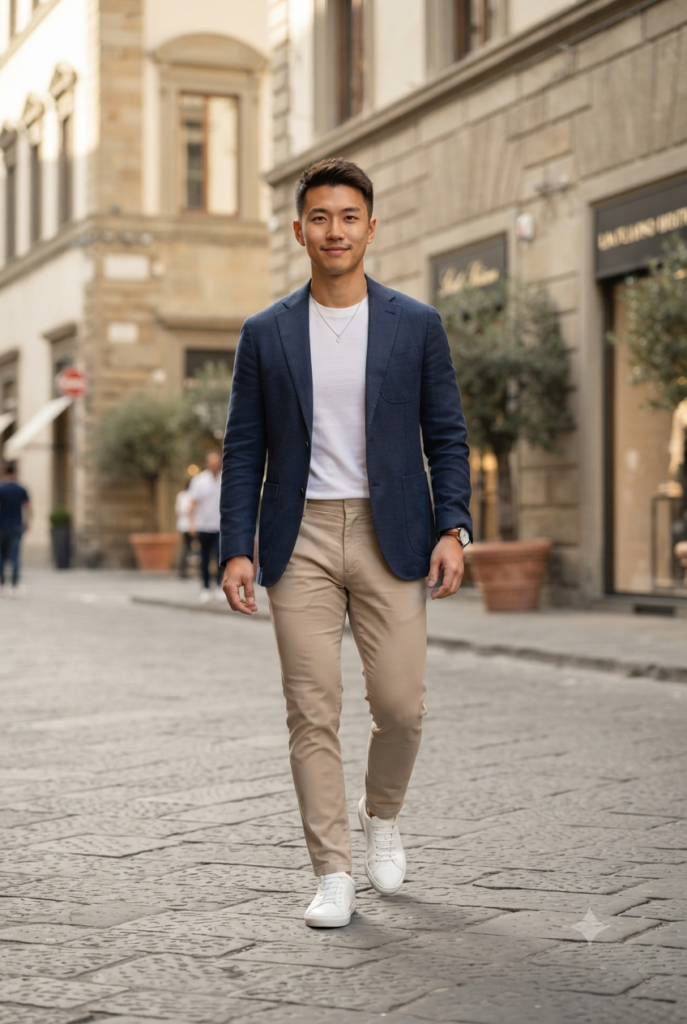
This is the combination that surprises men the most, because it takes the most “basic” piece in a wardrobe and pairs it with one of the more elevated pieces — an unstructured blazer — to create a genuinely smart-casual outfit.
Why it works: An unstructured blazer, unlike a traditional suit jacket, has minimal shoulder padding and a softer, more relaxed construction, which means it drapes naturally over a simple t-shirt without looking like a mismatched formal-casual mashup. The plain white tee underneath keeps the neckline clean and simple, letting the blazer itself provide all the structure and polish the outfit needs. This is a clear example of the fit-contrast principle in action: a soft, simple base layer under a more structured outer layer creates balance rather than competition.
Getting the proportions right: The white tee should be well-fitted, not baggy, since a boxy tee under a blazer can create unwanted bulk at the shoulders and torso. The blazer itself should have a slightly relaxed fit through the body — not a tightly tailored suit-style cut — so the whole combination reads as smart-casual rather than like a suit jacket someone forgot to wear with a dress shirt.
Pant and shoe pairing: Tailored chinos or dark, well-fitted trousers pair best here, since they match the slightly elevated tone the blazer introduces. Loafers, clean leather sneakers, or suede desert boots all work well, depending on how far you want to push the formality.
Best for: A dinner date at a nicer restaurant, a casual work event, a wedding with a relaxed dress code, or any occasion where you want to look sharp without wearing a full suit.
Look Four: Monochromatic and Minimal — All-White or All-Neutral Tonal Outfit
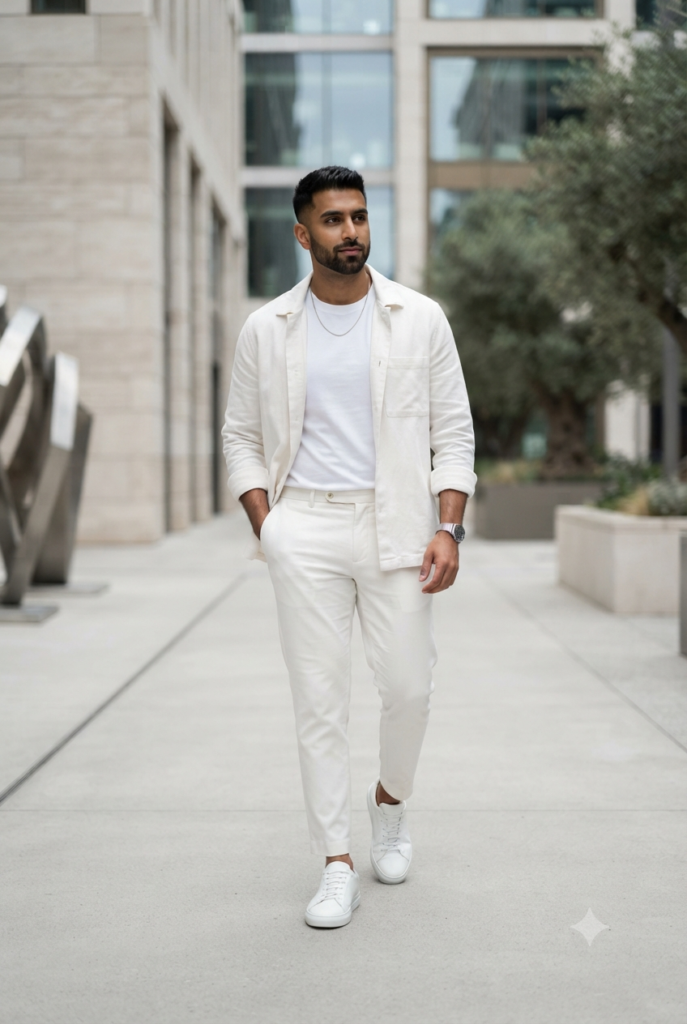
This look takes the white tee and builds an entire outfit around the same tonal family, creating a clean, minimalist look that reads as more deliberate and fashion-forward than most men expect from such a simple color approach.
Why it works: As covered in earlier guides, wearing different shades within the same color family — rather than trying to match one exact color — creates a clean, elevated look without requiring any real color-matching skill. A white tee with off-white or cream trousers, or a white tee with light grey or beige pants, relies entirely on subtle shade variation and texture contrast to stay visually interesting rather than looking like a flat, one-note outfit.
Why texture becomes essential here: Since color contrast is intentionally minimal in this look, texture is what keeps it from looking boring or flat. Pair a smooth cotton tee with a slightly textured linen-blend pant, or add a canvas or suede shoe, so the outfit has visual variation even though the palette stays tight.
Getting this right without it looking bland: Add one small contrasting element — a brown leather belt, a subtle patterned sock, a slightly darker shoe — so the eye has one clear point of contrast rather than an entirely flat, matched look. Without at least one small break in the palette, this outfit can start to look more like loungewear than a deliberate style choice.
Best for: Warm-weather daytime occasions, a clean and minimal summer look, brunch, or any situation where you want to look understated but clearly considered.
Look Five: Elevated Evening Casual — White Tee, Dark Trousers, and a Leather Jacket or Overcoat
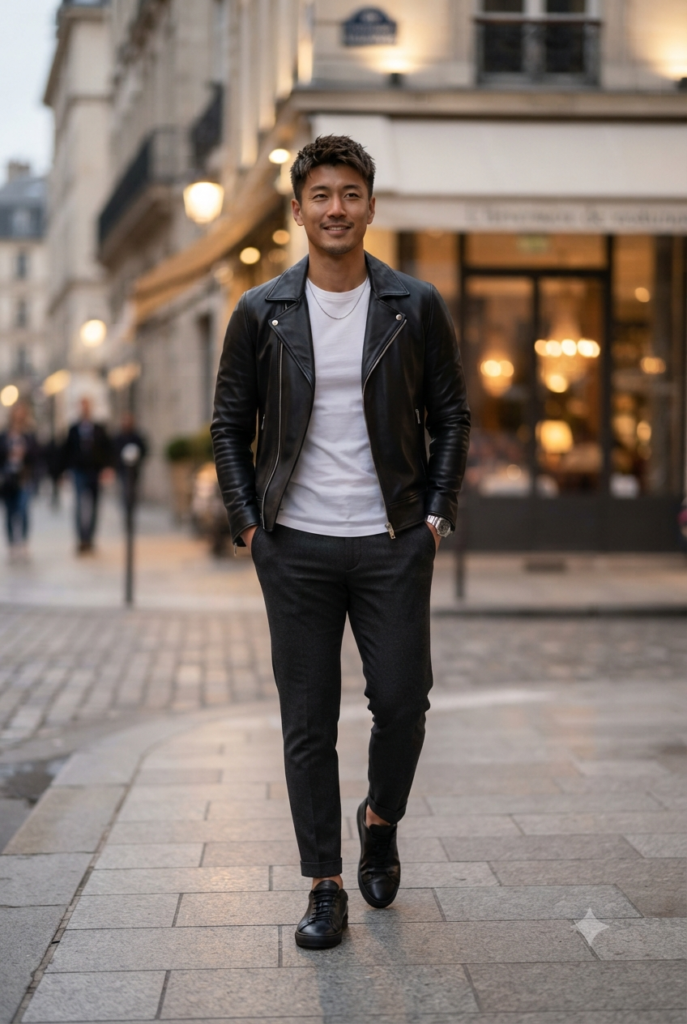
The final look pushes the white tee into more evening-appropriate territory by pairing it with a more substantial, higher-impact outer layer — a leather jacket, a suede jacket, or a tailored overcoat — along with darker, more polished trousers.
Why it works: This combination relies on a strong contrast between the extremely simple base layer and a much more visually distinct outer layer. A leather or suede jacket carries a lot of visual weight and texture on its own, so pairing it with the simplest possible base — a plain white tee — keeps the overall outfit from feeling overloaded. If you tried to pair a leather jacket with a patterned or busy shirt underneath, the two elements would compete; the white tee instead lets the jacket be the clear focal point.
Getting the proportions right: Dark, slightly tapered trousers (rather than baggy jeans) keep the lower half of the outfit clean and let the jacket and tee combination up top do the visual work. This is a look that benefits from a slightly more fitted overall silhouette, since a boxier fit throughout can start to feel heavy rather than sharp.
Footwear: Leather boots (chelsea boots work particularly well here) or minimal leather sneakers both complete this look without introducing an unnecessary third texture that competes with the jacket.
Best for: An evening out, a date at a stylish bar or restaurant, cooler-weather weekend evenings, or any occasion where you want a slightly edgier, more elevated take on casual dressing.
The Common Thread Across All Five Looks
Looking at these five outfits side by side, a clear pattern emerges: the white t-shirt never changes, but the company it keeps changes everything about how the outfit reads. This is really the core lesson of this entire guide, and it applies to nearly every basic piece in your wardrobe, not just a white tee.
The other pieces set the formality level. The tee itself is casual by nature, but a blazer, a leather jacket, or a monochromatic tonal palette can each pull the overall outfit toward a more elevated register, while dark jeans and sneakers keep it firmly casual.
Layering and texture do the work that a printed or patterned shirt would otherwise do. Because a white tee has no inherent visual interest, every one of these looks relies on texture contrast, layering depth, or color-family cohesion to keep things from looking flat.
Fit stays the constant requirement. In every single one of these five outfits, the white tee has to fit properly for the combination to work. A stretched-out or oversized tee undermines the smart-casual blazer look just as much as it undermines the classic casual look — fit isn’t optional in any version of this shirt’s use.
Common Mistakes When Styling a White T-Shirt
Wearing a tee that’s too thin or slightly see-through. This is more noticeable with white than almost any other color, and it’s one of the fastest ways to make an otherwise good outfit look cheap. A slightly heavier cotton weight solves this problem completely.
Ignoring yellowing or graying over time. White fabric shows age faster than most colors, and a slightly dingy white tee undercuts every one of the five looks above, no matter how well everything else is put together. Rotate your white tees more frequently than you might rotate darker basics, and consider retiring one once it’s noticeably lost its brightness.
Sizing up too much “for comfort.” A slightly oversized white tee can work in specific styling contexts (very intentionally, under a loose overshirt, for instance), but sizing up across the board usually just creates bulk and a shapeless silhouette, especially under more structured pieces like a blazer.
Treating it as exclusively a summer piece. As Looks Two, Three, and Five demonstrate, a white tee works well into cooler months too, as a base or mid layer under heavier pieces. Retiring it entirely once fall arrives means missing out on some of its most versatile uses.
Pairing it with only one styling approach. Most men who own a white tee only ever wear it the same casual way — the Look One combination — without realizing how differently it can perform when paired with a blazer, a leather jacket, or a tonal palette. This limits how much genuine use you get out of what’s actually one of your most flexible pieces.
Building Your Own Sixth, Seventh, and Eighth Combination
Once you understand why these five looks work, you can start building your own variations using the same underlying logic, rather than needing a new guide every time you want a new white-tee outfit.
Ask what role the tee is playing. Is it the entire visual focus (Look One, Look Four), or is it a quiet base layer letting something else take center stage (Look Two, Three, Five)? This single question determines almost everything else about how to build the rest of the outfit.
Choose your outer layer or bottoms based on the formality you want. A blazer or leather jacket pulls things upward in formality; dark jeans and sneakers keep things casual; a tonal, minimal palette pushes things toward understated and considered.
Make sure texture or color is doing some work somewhere in the outfit. Since the tee itself brings zero visual interest, at least one other piece — a textured knit, a leather jacket, a slightly different shade of neutral — needs to carry that responsibility, or the whole outfit risks looking flat.
Check fit last, every time. No matter which combination you land on, confirm the tee itself is properly fitted before finalizing the outfit. This single detail affects the success of every version of this look more than any other single decision.
Frequently Asked Questions
How many white t-shirts should I actually own? Three to five is a reasonable range for most men, since white cotton shows wear faster than darker basics and benefits from more frequent rotation. Having a few in consistent rotation also means you’re never stuck wearing a noticeably faded or yellowed shirt out of necessity.
Is a crew neck or v-neck better for styling purposes? Crew necks are generally more versatile and work better under layered pieces like overshirts or blazers, since they show less skin at the neckline and pair more predictably with collared layers underneath a jacket. V-necks can look good on their own or under an open collared shirt, but they’re a slightly more situational choice.
Can I wear a white t-shirt to a semi-formal event if I dress it up enough? It’s possible with the right supporting pieces — a tailored blazer, dress trousers, and polished shoes — but it depends heavily on the specific event’s dress code. For anything explicitly formal, a collared shirt is generally the safer choice, but for relaxed semi-formal settings, a well-executed version of Look Three can work.
Does the shape of the shirt (boxy vs. fitted) matter more than the color? Fit generally matters more than most other variables for how put-together an outfit looks, since a poor fit undermines even a perfectly coordinated color palette. That said, for a white tee specifically, both fit and fabric quality carry significant weight, since there’s no pattern to distract from either one.
What’s the best way to keep a white t-shirt looking bright over time? Washing in cold water, avoiding excessive dryer heat, and treating stains promptly rather than letting them set all help preserve brightness longer. Some men also keep an “at home” rotation for tees that have started to fade slightly, saving the brightest ones specifically for outfits where the shirt is more visible.
Are graphic white t-shirts as versatile as plain ones? Not quite. A graphic tee introduces a focal point that competes with other elements the way a plain tee doesn’t, which limits how easily it layers under structured pieces like blazers. Plain white tees remain more versatile specifically because they don’t compete with anything else in the outfit.
Can this same approach work with other basic colors, like black or grey? Yes, entirely. The five-look framework here — casual base, layered under an overshirt, layered under a blazer, tonal minimalism, and elevated evening pairing — applies just as well to a plain black or grey tee, since the underlying logic is about the role the shirt plays, not the specific color.
Is it ever too casual to wear a t-shirt to work, even under a blazer? This depends heavily on your specific office’s dress code, but many business casual offices do accept a well-fitted tee under a blazer as a smart-casual option, particularly for Casual Fridays or more relaxed industries. If your office leans more traditional, a collared shirt remains the safer default.
What jacket weight should I look for if I want one jacket that works across most of these looks? An unstructured cotton or cotton-blend blazer is probably the single most versatile option, since it works for Look Three directly and can substitute reasonably well into Look Two’s overshirt role on milder days, covering two of the five looks with one investment piece.
Final Thoughts
The plain white t-shirt is a good reminder that stylish dressing isn’t really about owning more or flashier clothes — it’s about understanding how a small number of well-chosen pieces can be recombined into genuinely different outfits. You already own the hardest part of this equation. The next time you reach for that same white tee, try pairing it with something you wouldn’t normally consider — an overshirt, a blazer, a tonal palette — and notice how much the same simple shirt can change depending on what surrounds it.
Read also: