
How to Create a Capsule Wardrobe for Effortless Outfits

Open most men’s closets, and you’ll find the same pattern: plenty of clothes, and still nothing that feels right to wear together.
A drawer full of shirts that don’t quite match any of the pants, jackets that only pair with one specific outfit, a handful of impulse purchases that seemed like a good idea at the time, and have barely been worn since.
The closet is full, but getting dressed still feels like a daily negotiation.
This is the exact problem a capsule wardrobe is designed to solve, and it’s worth being clear about what that actually means, because the term gets used loosely.
A capsule wardrobe isn’t about owning as few clothes as possible for its own sake, and it’s not some extreme minimalist lifestyle choice.
It’s a small, deliberately chosen collection of clothing where every piece is selected specifically because it coordinates with several others, so a relatively modest number of items produces a genuinely large number of usable outfit combinations.
This guide is going to walk through exactly how to build one — the reasoning behind why a well-built capsule outperforms a much larger, uncoordinated wardrobe, which specific pieces to prioritize, and how to actually put the whole thing together so that getting dressed stops requiring any real thought at all.
Why a Capsule Wardrobe Actually Works Better Than a Large Closet
The math behind a capsule wardrobe is worth understanding directly, because it explains why this approach produces more usable outfits than simply owning more clothes.
Imagine two closets. The first has thirty pieces, purchased somewhat randomly over time — some trendy items, a few impulse buys, pieces in colors and styles that don’t particularly relate to each other.
The second has fifteen pieces, but every single one was chosen specifically to coordinate with several of the others in color, formality, and style.
Despite having half as many items, the second closet will almost always produce more genuinely wearable outfit combinations, because coordination — not raw quantity — is what actually determines how many outfits you can build.
This is the entire logic behind a capsule wardrobe: instead of buying items in isolation and hoping they eventually combine into outfits, you build the wardrobe as an interconnected system from the start, where every new piece is chosen specifically because of how it relates to what you already own.
One mistake I see repeatedly is men assuming that having “enough” clothes is about volume — more shirts, more jackets, more pants — when the actual limiting factor in most closets is coordination, not quantity.
A capsule wardrobe fixes the coordination problem directly, which is why it tends to feel like having far more outfit options, even with objectively fewer total pieces.
The Core Principle: Build a System, Not a Collection
The most important mental shift when building a capsule wardrobe is thinking of your closet as an interconnected system rather than a collection of individual pieces. Every item you own should ideally pair with at least several other pieces already in your closet. If a specific piece only really works with one other item, it’s functioning more like an isolated purchase than part of your actual wardrobe system, regardless of how much you might like it on its own.
This system-based thinking is what separates a genuine capsule wardrobe from simply owning a small number of clothes.
A closet with ten completely unrelated pieces isn’t a capsule wardrobe — it’s just a small, uncoordinated closet.
A true capsule specifically maximizes the relationships between pieces, which is where the real value comes from.
Building Your Capsule Around Neutral Basics
The foundation of nearly every successful capsule wardrobe is a core palette of neutral colors, and understanding why this matters is essential before choosing any specific pieces.
Navy, grey, white, black, beige, and olive form the most reliable neutral foundation. These colors all coordinate easily with each other without any real risk of clashing, which means every piece you own in this palette instantly combines with everything else in the same palette.
This is the single biggest lever available for maximizing outfit combinations from a limited number of pieces.
A capsule built entirely around neutrals will always produce more combinations than one built around a mix of bold, specific colors. A bold burnt-orange jacket might only genuinely coordinate with two or three other pieces in your closet, while a navy jacket in the same category will likely coordinate with nearly everything.
This doesn’t mean bold colors have no place in a capsule wardrobe — it means they should be added deliberately, as accents layered onto an already-solid neutral foundation, rather than forming the core of the wardrobe itself.
Texture becomes the primary source of visual interest in a neutral-heavy capsule. Since color variation is intentionally limited, texture — a knit sweater against a woven shirt, a smooth cotton tee against a textured field jacket — is what keeps an all-neutral wardrobe from feeling flat or boring, as covered in more detail in dedicated color and fabric guides.
The Essential Categories Every Capsule Wardrobe Needs
Rather than thinking piece by piece, it helps to think in terms of categories, since a well-rounded capsule needs coverage across several functional roles.
Base Layers (T-Shirts and Henleys)

These are your most foundational pieces, worn either on their own in casual settings or as a base layer under heavier pieces. Two to four pieces in neutral colors — white, grey, navy — cover the vast majority of situations, since these fundamental colors work equally well standing alone or hidden mostly under a jacket or sweater.
Collared Shirts

A step up in formality from a plain tee, collared shirts (oxford cloth, chambray, a lightweight flannel depending on season) extend your capsule’s range into business casual and slightly dressier casual occasions. One or two versatile options, in white or light blue, generally cover this category efficiently.
A Sweater or Two

A crewneck or quarter-zip sweater in a neutral tone adds both warmth and a mid-layer option that works over a collared shirt or under a jacket. This single category does an enormous amount of work in a capsule wardrobe, since it bridges casual and business casual settings equally well.
A Versatile Jacket or Overshirt
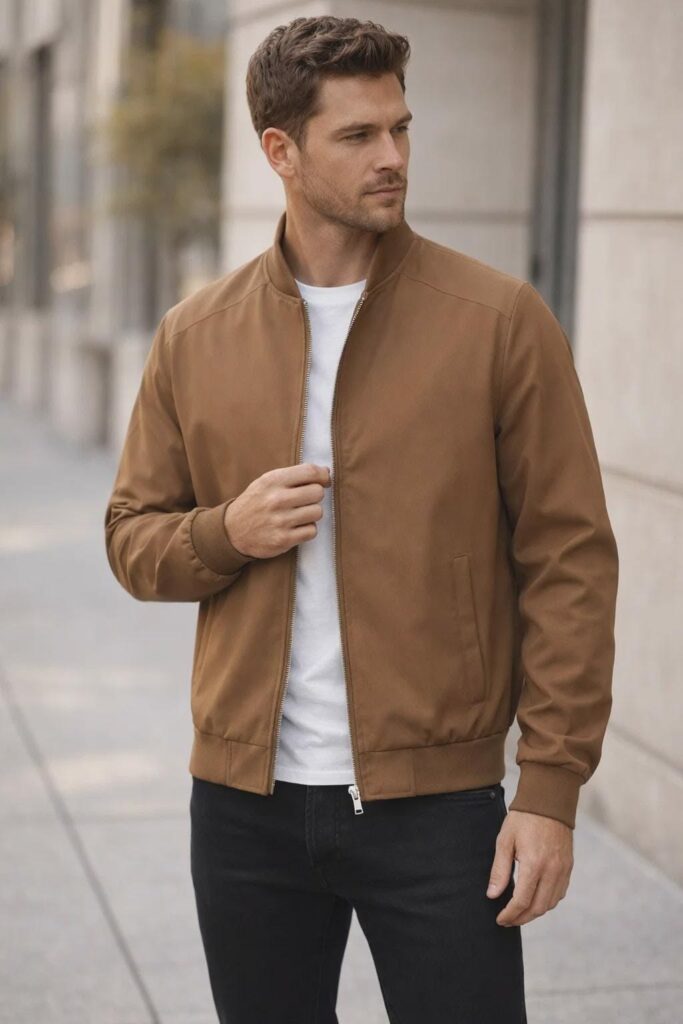
An overshirt, field jacket, or unstructured blazer functions as your formality dial, discussed in more detail in dedicated business casual and layering guides. One well-chosen piece in this category can push an outfit toward more formal or keep it relaxed, depending on what it’s paired with, which makes it one of the highest-value single items in any capsule.
Two Pairs of Pants
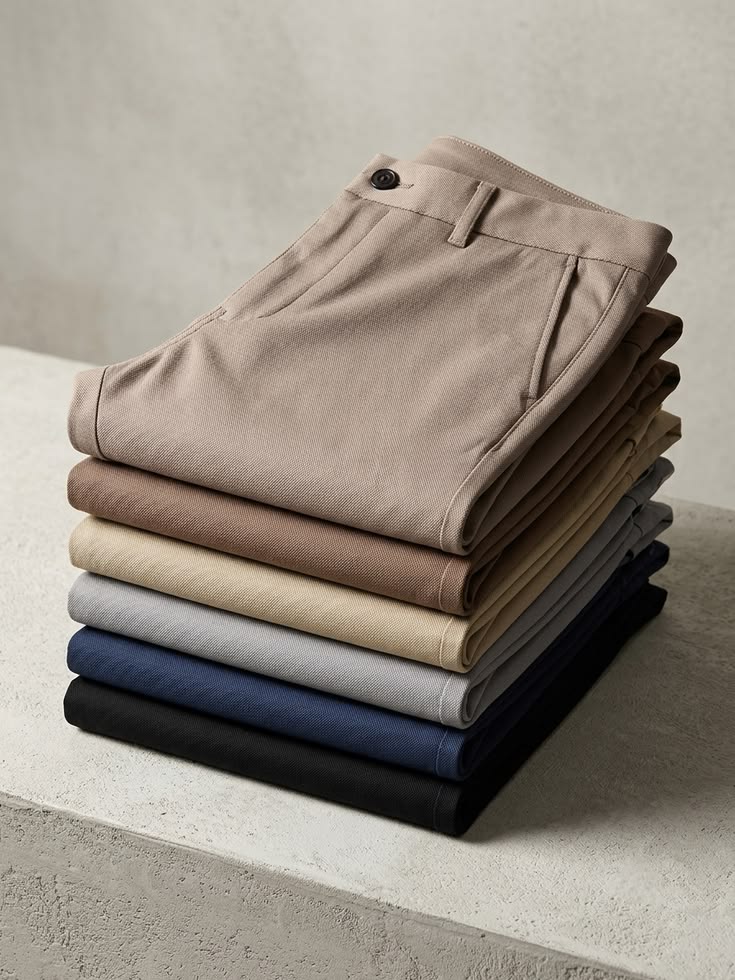
A pair of dark, well-fitted jeans and a pair of chinos in a neutral color together cover the vast majority of casual and business casual situations. These two categories alone, paired with your various tops, already produce a significant number of combinations before adding anything else.
Two Pairs of Shoes
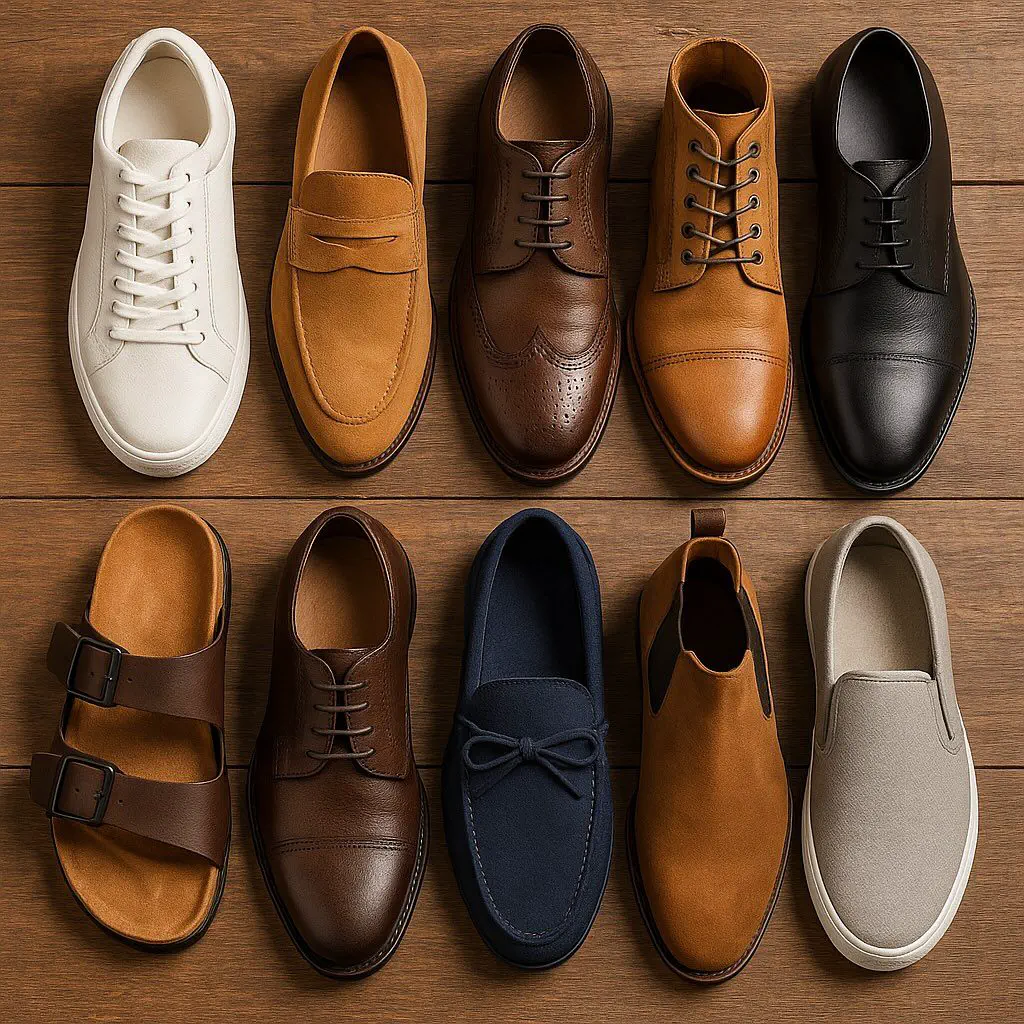
A clean pair of leather or minimalist sneakers covers casual and moderately dressy situations, while a pair of leather boots or loafers covers slightly more elevated occasions. Two well-chosen pairs, rather than five mediocre ones, tend to cover a surprisingly wide range of situations.
One Elevated Outer Layer

Depending on your climate and lifestyle, this might be a wool overcoat, a leather jacket, or a heavier field jacket — something that pushes an outfit toward a more polished or distinctive register when the occasion calls for it.
A Sample Capsule Wardrobe Breakdown
Putting the categories above together, here’s what a genuinely functional capsule wardrobe might look like in practice:
- 3 t-shirts (white, grey, navy)
- 1 long-sleeve Henley
- 2 collared shirts (white Oxford, light blue Oxford)
- 1 crewneck sweater (grey or navy)
- 1 overshirt or field jacket (olive or navy)
- 1 unstructured blazer (navy)
- 1 pair of dark jeans
- 1 pair chinos (khaki or olive)
- 1 pair of clean leather sneakers
- 1 pair of leather boots or loafers
- 1 belt (brown or black)
That’s roughly fifteen core pieces. Because every single one was chosen specifically for its ability to coordinate with several others in the same neutral palette, this relatively small list can realistically produce somewhere between thirty and fifty distinct outfit combinations — likely more usable combinations than many men get out of a wardrobe two or three times this size, simply because those larger wardrobes weren’t built with this same level of intentional coordination.
How to Actually Build Your Capsule: A Step-by-Step Process
Step 1: Audit What You Already Own
Before buying anything new, go through your current wardrobe and identify which pieces already fit the capsule model — versatile, neutral, well-fitting, coordinating with several other things you own. You’ll likely find you already have a partial capsule hiding inside a larger, less organized closet, which means your actual gap is usually smaller than it initially feels.
Step 2: Identify the Genuine Gaps
Once you know what you’re keeping, compare it against the category list above and identify what’s actually missing. This might be a completely empty category (no sweaters at all, for instance) or a category where your existing pieces don’t coordinate well with the rest of your closet (a colorful jacket that doesn’t pair with anything else you own).
Step 3: Prioritize the Highest-Impact Category First
Not every gap is equally important. A missing versatile jacket or a missing pair of well-fitted pants typically unlocks more new outfit combinations than a fourth t-shirt would, since jackets and pants tend to interact with a wider range of other pieces. Fill the highest-impact gaps first, rather than buying whatever’s easiest or most exciting to shop for.
Step 4: Buy Slowly and Deliberately
A capsule wardrobe doesn’t need to be built in one large shopping trip, and trying to do so often leads to rushed decisions and less careful coordination. Building it gradually — one or two pieces at a time, each specifically chosen to fill an identified gap — tends to produce a more genuinely coordinated result than an all-at-once overhaul.
Step 5: Remove What Doesn’t Fit the System
As you build out your capsule, it’s worth honestly evaluating pieces that don’t coordinate well with the rest of your closet. This doesn’t mean throwing away everything that isn’t a neutral basic, but it does mean being clear-eyed about which pieces are actually earning their place in your day-to-day rotation versus which ones are simply taking up space without adding real outfit value.
Adding Personality Without Breaking the System
A common concern about capsule wardrobes is that an all-neutral approach might feel bland or impersonal. This is a fair concern, but it’s solvable without abandoning the core system.
Add bold or unusual pieces deliberately, as accents on top of your neutral foundation. Once your core capsule is solidly built, a single statement piece — a bold jacket, a distinctive pattern, an unusual texture — can be layered in occasionally, using the same principles covered in dedicated statement-piece guides, without disrupting the coordination of your foundational wardrobe.
Use accessories as your primary outlet for personal expression. A distinctive watch, an interesting bag, a patterned sock — these small, easily swappable items let you inject personality into an outfit without requiring your entire capsule to revolve around bold, less versatile pieces.
Texture and subtle pattern still allow for plenty of visual interest within a neutral palette. A capsule wardrobe built around neutral colors doesn’t have to mean visually flat or boring — as covered earlier, texture contrast does a huge amount of the work in keeping an all-neutral wardrobe feeling considered rather than plain.
Capsule Wardrobes Across Seasons
A single, static capsule doesn’t necessarily need to change entirely with the seasons, but it’s worth understanding how the same underlying system adapts.
Core neutral basics — t-shirts, jeans, a versatile blazer — often work across most of the year with minimal adjustment. These pieces form the stable foundation of your capsule regardless of season.
Seasonal layers rotate in and out around this stable core. A lighter overshirt or short-sleeve shirt might come into rotation for summer, while a heavier sweater and wool overcoat come into rotation for winter, without requiring you to rebuild your entire capsule from scratch each time the weather changes.
Footwear often shifts more than any other single category between seasons. Canvas sneakers and lighter shoes for summer give way to boots and warmer options for winter, while your core neutral clothing pieces largely stay the same throughout.
This seasonal approach means you’re really maintaining one core capsule with a rotating set of seasonal additions, rather than building four entirely separate wardrobes throughout the year, which keeps the overall system manageable and genuinely capsule-like even as specific pieces shift with the weather.
Common Capsule Wardrobe Mistakes
Building the capsule around trend pieces instead of timeless basics. A capsule wardrobe built around whatever’s currently trending will need frequent, expensive rebuilding as those trends pass, which defeats the entire purpose of a stable, long-term system. Timeless basics — as covered in budget and shopping-strategy guides — remain functional and current far longer than trend-driven pieces.
Adding too many bold or specific pieces relative to the neutral foundation. A capsule with more statement pieces than versatile basics loses much of its coordination advantage, since bold or unusual pieces inherently combine with fewer other items. Keep the ratio weighted heavily toward neutral basics, with bold pieces as the occasional exception rather than the rule.
Treating the capsule as permanently fixed rather than an evolving system. A capsule wardrobe isn’t a one-time project you complete and never touch again — pieces wear out, personal style evolves, and seasonal needs shift. Revisiting and adjusting your capsule periodically keeps it genuinely useful rather than becoming outdated.
Buying too much at once without properly evaluating fit and coordination. As covered in the step-by-step process above, building a capsule gradually and deliberately produces a better result than a single large purchase, which tends to include at least a few pieces that don’t actually coordinate as well as they seemed to in the moment.
Confusing “minimal” with “boring.” A well-built capsule wardrobe, through smart use of texture, subtle color variation, and the occasional deliberate accent piece, can feel just as personal and interesting as a much larger, less organized closet — the constraint is on quantity and lack of coordination, not on personal style itself.
The Practical Payoff: Why This Approach Actually Saves Time and Money
Beyond the aesthetic benefits, a capsule wardrobe offers two very practical advantages that are worth stating directly.
It saves time every single morning. When every piece in your closet coordinates with several others, you can grab almost any combination and know it’ll work, which removes the daily decision fatigue that comes from an uncoordinated closet full of pieces that only work with one or two specific items.
It saves money over time, even though individual pieces might occasionally cost more. Because every piece in a well-built capsule gets worn regularly (since it coordinates with so much else), the actual cost-per-wear across the wardrobe tends to be significantly lower than a larger, less coordinated closet full of items worn only occasionally. Spending slightly more on fewer, better, more versatile pieces often works out cheaper in practice than accumulating a much larger collection of items that don’t get equal use.
Frequently Asked Questions
How many total pieces should a capsule wardrobe actually include? There’s no single universal number, but somewhere between thirty and fifty total pieces (including all clothing categories — tops, bottoms, outerwear, and shoes) is a common range for a genuinely functional capsule wardrobe covering most everyday situations across seasons. The exact number matters less than whether every piece coordinates well with several others.
Do I need to throw away everything that doesn’t fit the capsule model? Not necessarily. You can maintain a smaller number of non-capsule pieces — sentimental items, very occasion-specific clothing, or pieces you simply love regardless of coordination — alongside your core capsule, as long as the bulk of your everyday wardrobe follows the coordinated system.
Is a capsule wardrobe the same thing as minimalism? They overlap conceptually but aren’t identical. Minimalism as a broader philosophy is about owning less in general, while a capsule wardrobe is specifically about maximizing coordination and versatility within a deliberately curated set of clothing. You can build a capsule wardrobe without adopting minimalism as a broader lifestyle approach.
How do I handle special occasions that don’t fit my everyday capsule — like a formal wedding? It’s reasonable to maintain a small number of occasion-specific pieces (a suit, for instance) outside your everyday capsule, specifically for situations that genuinely require something your regular rotation doesn’t cover. These occasional-use pieces don’t need to meet the same coordination requirements as your daily capsule, since their value comes from infrequent, specific use rather than everyday versatility.
Should my capsule wardrobe include workout clothes? Most capsule wardrobe frameworks focus specifically on everyday and work clothing rather than athletic wear, since workout clothing generally follows different functional priorities (moisture management, freedom of movement) than the aesthetic coordination goals covered in this guide. It’s reasonable to maintain workout clothing as a separate category outside your core capsule.
How often should I revisit or update my capsule wardrobe? Rather than a fixed schedule, revisit your capsule whenever a piece wears out, stops fitting, or when your lifestyle changes significantly (a new job with a different dress code, for instance). A well-built capsule doesn’t need frequent updates, but it’s not meant to be permanently frozen either.
Can a capsule wardrobe work if my job requires a suit or more formal attire regularly? Yes, the same coordination principles apply — you’d simply build your capsule around a small number of well-coordinated suits, dress shirts, and formal shoes rather than casual basics, following the same logic of choosing pieces specifically for their ability to combine with several others in your formal rotation.
Is it more expensive to build a capsule wardrobe than to just buy clothes as needed? It can require a moderate upfront investment if you’re building several categories from scratch at once, but the deliberate, gradual approach outlined in this guide (buying slowly, prioritizing high-impact gaps) generally costs less overall than years of accumulating uncoordinated pieces, particularly once you factor in the improved cost-per-wear of a well-coordinated wardrobe.
What if I get bored wearing the same small rotation of pieces? This is a common concern, but a well-built capsule of around thirty to fifty pieces typically produces far more outfit combinations than most men realize, specifically because of the coordination-based math covered earlier in this guide. If boredom does set in, it’s usually a signal to add one or two accent pieces or accessories, rather than needing to abandon the capsule approach altogether.
Do capsule wardrobes work the same way for very different personal styles — streetwear versus classic menswear, for instance? Yes, the underlying coordination principle applies regardless of specific style aesthetic. A streetwear-focused capsule would simply prioritize different specific pieces (graphic tees, sneakers, technical outerwear) while still applying the same core logic of choosing items specifically for their ability to combine with several others in the same wardrobe.
Final Thoughts
A capsule wardrobe isn’t about limiting yourself or giving up personal style — it’s about building a genuinely functional system where every piece earns its place by working well with several others.
Start by auditing what you already own, fill the highest-impact gaps first, and resist the urge to build the whole thing in a single shopping trip.
The real payoff isn’t just a tidier closet — it’s the ability to get dressed quickly, confidently, and well, almost every single day, without the daily negotiation that comes from a larger but less coordinated wardrobe.
Read also: