How to Build an Outfit Around One Statement Piece

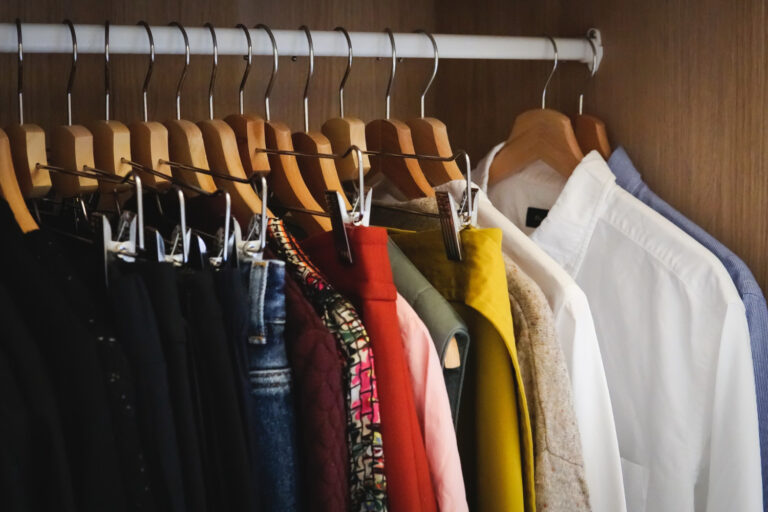
You’ve probably bought at least one piece of clothing that you genuinely loved in the store — a bold jacket, an interesting print, a color you don’t normally wear — and then found it sitting untouched in your closet for months afterward.
Not because you stopped liking it, but because you could never quite figure out how to actually wear it without the rest of the outfit feeling like it was competing with the one piece you were excited about in the first place.
This is one of the most common reasons men end up with a closet full of clothes they rarely reach for.
A statement piece — anything with a bold color, distinct pattern, unusual texture, or strong silhouette — requires a genuinely different approach than building an outfit out of neutral basics.
Treat it the same way you’d treat a plain t-shirt, and it either gets buried under equally loud pieces competing for attention, or it gets left in the closet entirely because nothing else in your wardrobe seems to know how to support it.
The good news is that building around a statement piece isn’t complicated once you understand the actual principle behind it: a statement piece needs a supporting cast, not competition.
This guide is going to walk through exactly how that works — how to identify what counts as a genuine statement piece, how to build the rest of an outfit specifically to support it, and how to avoid the most common mistakes that leave bold pieces sitting unused.
What Actually Counts as a Statement Piece
Before getting into how to style one, it’s worth being specific about what a statement piece actually is, since the category is broader than most men assume.
Bold color is the most obvious category — a burnt orange jacket, a deep burgundy sweater, a bright print shirt. Anything that reads as significantly more saturated or unusual than your typical neutral wardrobe.
Distinct pattern is a second category, even in otherwise muted colors — a large check, a bold stripe, an unusual print. A pattern doesn’t need bright color to function as a statement piece; scale and boldness of the pattern itself can be enough.
Unusual texture or material is a third, often overlooked category — a shearling jacket, a suede piece, a heavily textured knit. These pieces draw attention through their surface quality rather than color or pattern, but they demand the same supporting approach.
Strong silhouette is the final category — a piece with an unusual cut, an oversized shape, or a distinctive structural detail. Even in a completely neutral color, a piece with a genuinely unusual shape functions as a statement piece because it draws the eye differently than a standard-cut garment would.
Understanding which category your piece falls into actually matters, because it changes exactly how you’ll build the rest of the outfit around it, as covered below.
The Core Principle: One Focal Point, Everything Else in Support
The single most important idea in this entire guide is this: an outfit can really only support one visual focal point at a time. If you’re wearing a statement piece, everything else in the outfit needs to actively support that piece rather than compete with it for attention. This is different from typical outfit-building, where the goal is often creating overall balance between several relatively equal pieces. With a statement piece, the goal shifts specifically to elevating one piece while keeping everything else deliberately quiet.
This is genuinely why statement pieces so often end up unworn — men either try to pair them with other equally loud items (creating visual competition), or they don’t realize the rest of the outfit needs to be pulled back specifically to make room for the one bold piece to actually read as intentional.
Building Around a Bold Color Statement Piece
If your statement piece is defined primarily by its color — a bright jacket, a bold sweater, a vividly colored shirt — the approach centers on the same 60-30-10 color framework covered in earlier color-matching guides, but applied specifically to protect the statement piece’s role.
Keep Everything Else Neutral
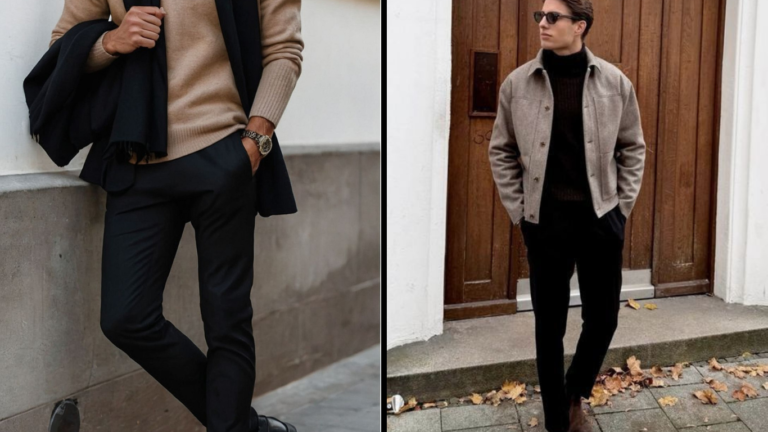
The most reliable approach is pairing a bold-colored statement piece with entirely neutral supporting pieces — navy, grey, white, black, beige. This ensures nothing else in the outfit competes with the statement piece for color attention, letting it read clearly as the intentional focal point rather than one loud element among several.
Let the Statement Piece Occupy the “60%” Role, Not the “10%” Role
If your statement piece is a jacket or a larger garment, it will naturally occupy the dominant visual space in an outfit, which works well with the 60-30-10 framework directly — the bold piece becomes your dominant color, and everything else becomes secondary and accent, all pulled from neutral territory.
If your statement piece is smaller — a bold shirt worn under a neutral jacket, for instance — make sure it still gets enough visual room to read clearly. A bold shirt completely buttoned up and hidden under a buttoned jacket loses its impact; leaving the jacket open, or choosing a lighter jacket that doesn’t overwhelm the shirt underneath, keeps the statement piece visible enough to actually register.
Avoid a Second Bold Color Entirely
This is the single most common mistake with color-based statement pieces: pairing a bold jacket with an equally bold shirt or pants underneath, hoping the combination will look intentionally daring. In practice, two competing bold colors usually just create visual confusion rather than a cohesive, elevated look. If you have a genuinely bold piece, resist the urge to double down with a second one in the same outfit.
Building Around a Patterned Statement Piece
Patterns require a slightly different approach than solid bold colors, since the visual complexity comes from the pattern itself rather than pure color saturation.
Keep Everything Else Solid
If your statement piece is a bold pattern — a large plaid, a distinctive print, a bold stripe — every other piece in the outfit should be solid, without competing patterns. This is the most reliable rule in the entire guide for pattern-based statement pieces: one pattern per outfit, full stop, unless you’re deliberately experimenting with the more advanced pattern-mixing techniques covered in dedicated color guides.
Pull a Coordinating Color From the Pattern
Most patterns contain more than one color within them. A useful technique is picking one of those secondary colors and echoing it subtly elsewhere in the outfit — a pair of socks, a belt, a simple accessory — which ties the pattern piece into the rest of the outfit without introducing a second competing pattern or an unrelated new color.
Let the Pattern’s Scale Guide the Rest of the Outfit’s Simplicity
A very large, bold pattern demands an especially simple supporting outfit — plain solid pieces, minimal texture variation elsewhere. A smaller, more subtle pattern has slightly more room for one additional textured (but still solid-colored) piece elsewhere in the outfit, since the overall visual complexity being introduced is lower to begin with.
Building Around a Textured Statement Piece
Textural statement pieces — a shearling jacket, a suede item, a heavily cabled knit — work slightly differently than color or pattern, since the visual interest comes from surface quality rather than color or print.
Simplify the Color Palette, but Feel Free to Keep Other Textures Subtle
Textured statement pieces generally pair well with a fairly restrained neutral color palette, similar to bold color pieces, but they have slightly more tolerance for one additional subtle texture elsewhere in the outfit (a lightly textured knit under a shearling jacket, for instance), since texture-on-texture reads differently than color-on-color or pattern-on-pattern competition.
Let the Statement Piece’s Silhouette Breathe
Heavily textured pieces often carry more visual bulk than a smooth, flat garment of the same size. Pairing a textured statement piece with a slightly more fitted layer underneath (rather than an equally bulky piece) keeps the overall silhouette from feeling overwhelming, applying the same fit-contrast principle covered in general outfit-building guides.
Building Around a Strong Silhouette Statement Piece
An unusually shaped or structured piece — an oversized jacket, a dramatically cropped garment, a piece with distinctive structural detail — needs the rest of the outfit to actively support and balance its unusual proportions, rather than adding competing shape elsewhere.
Balance Unusual Proportions With Simple, Predictable Ones Elsewhere
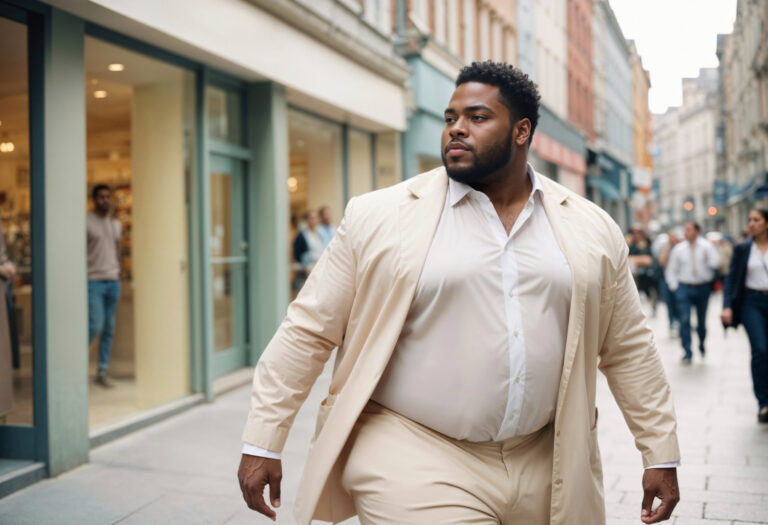
If your statement piece is oversized, pair it with more fitted pieces elsewhere in the outfit (slimmer pants, a more fitted base layer) so the overall silhouette reads as an intentional proportion choice rather than an outfit that’s simply too big everywhere. This is the same proportion-balancing principle covered in general outfit-building guides, just applied more deliberately because the statement piece’s shape is more extreme than a standard-cut garment.
Keep Color and Pattern Simple So the Shape Can Be the Focus
Since the visual interest here comes from silhouette rather than color or pattern, keeping the rest of the outfit in simple neutral colors and solid patterns lets the unusual shape read clearly as the intentional focal point, rather than competing with additional color or pattern noise elsewhere.
A Practical Step-by-Step Process
Regardless of which category your statement piece falls into, here’s a repeatable process for building an outfit around it.
Step 1: Identify exactly what makes the piece a “statement” — color, pattern, texture, or silhouette. This determines which specific supporting strategy from above applies most directly.
Step 2: Choose your base layer to complement, not compete. If the statement piece is a jacket or outer layer, the base layer underneath should be simple and neutral, giving the statement piece room to be the visual focus.
Step 3: Choose your bottoms based on proportion and color neutrality. Dark jeans, chinos, or simple trousers in a neutral color almost always work well as a foundation, regardless of what category your statement piece falls into.
Step 4: Choose footwear that doesn’t introduce a second focal point. A simple, well-fitted shoe in a neutral color keeps the statement piece as the clear focus, rather than competing with a bold or unusual shoe choice elsewhere in the outfit.
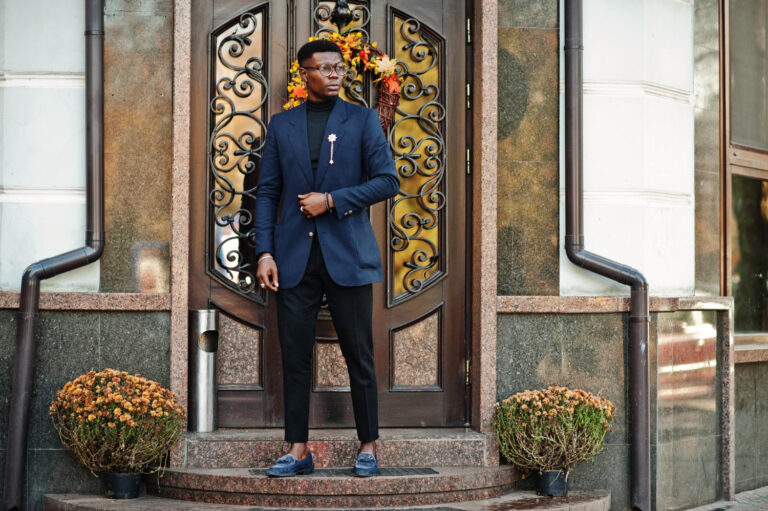
Step 5: Skip additional accessories, or choose exactly one very subtle one. A statement piece already provides the outfit’s single focal point; additional accessories should be minimal and understated, rather than adding a second area of visual interest that pulls attention away from the piece you’re actually trying to showcase.
Common Mistakes When Styling Statement Pieces
Pairing two statement pieces in the same outfit. This is by far the most common mistake, and it comes from a reasonable but misguided instinct — if one bold piece looks good, surely two will look even better. In practice, two statement pieces almost always compete for attention rather than complementing each other, leaving the outfit feeling chaotic rather than intentional.
Hiding the statement piece under too many other layers. A bold shirt buried under a buttoned jacket, or an interesting jacket layered under an even bulkier coat, loses its visual impact entirely. If you’re wearing a statement piece, make sure it actually has room to be seen.
Choosing overly busy accessories alongside a statement piece. A bold jacket paired with a loud watch, a patterned bag, and colorful socks all at once spreads the visual attention too thin. Keep supporting accessories minimal so the statement piece remains the clear focal point.
Assuming a statement piece needs an equally elaborate outfit around it. This is the opposite of how it actually works. The more dramatic the statement piece, the simpler and more restrained the rest of the outfit generally needs to be in order to let it shine.
Never actually wearing the piece because you can’t figure out how to style it. This is ultimately the most common outcome, and it’s exactly what this guide is meant to solve. A statement piece that stays in the closet provides zero value regardless of how much you paid for it or how much you love it in theory.
Building Confidence With Bolder Pieces Over Time
If you’re not used to wearing statement pieces, it’s worth starting with a lower-risk version of this approach before working up to something bolder. A slightly muted or smaller-scale statement piece — a subtle patterned shirt rather than a very loud print, a deep jewel-tone sweater rather than a neon color — lets you practice the “one focal point, everything else in support” principle without feeling like you’re taking a huge risk right out of the gate.
As you get more comfortable reading how a statement piece changes the rest of an outfit’s requirements, you can gradually work toward bolder pieces with more confidence, since the underlying principle stays exactly the same regardless of how dramatic the piece itself becomes.
Why This Approach Actually Saves You Money
Beyond the styling benefit, understanding how to build around a statement piece has a real practical payoff: it means the boldest, most exciting pieces in your closet — the ones you were genuinely drawn to when you bought them — actually get worn regularly, rather than sitting unused because you never figured out how to style them.
This directly improves the cost-per-wear value of exactly the pieces that are often hardest to build outfits around, turning what might have been a wasted purchase into one of the more interesting, frequently worn parts of your wardrobe.
It’s also worth noting that this approach means you don’t need a large wardrobe of “supporting” neutral pieces specifically for each statement item — the same handful of neutral basics (a plain white tee, dark jeans, simple leather sneakers) work as the supporting cast for almost any statement piece you own, regardless of its specific color, pattern, or texture.
One small, well-chosen set of neutrals effectively supports an unlimited number of bolder pieces layered in on top.
Frequently Asked Questions
How many statement pieces should a typical wardrobe include? There’s no fixed number, but most well-balanced wardrobes include a relatively small handful of statement pieces (three to six, roughly) supported by a much larger base of neutral basics. Too many statement pieces relative to your neutral supporting wardrobe can leave you without enough simple pieces to actually build outfits around each one.
Can two statement pieces from different categories ever work together — like a bold color and a strong silhouette? It’s possible but genuinely difficult to execute well, and it’s not a recommended starting point. If you want to try combining two statement elements, it generally works best when one is significantly more dominant than the other, effectively making the second element function more like a supporting accent than a true second focal point.
What if my statement piece doesn’t fit neatly into just one category — like a boldly colored piece with an unusual silhouette too? Treat it as a stronger statement piece overall and lean even further into a simple, quiet supporting outfit around it. A piece that combines multiple statement categories at once needs more visual space, not less, to read as intentional rather than overwhelming.
Is it ever okay to wear a statement piece with another statement piece if they’re both fairly subtle? This is possible with experience, but it requires careful attention to make sure the two pieces are genuinely complementary rather than competing — sharing a color family, for instance, or differing significantly in scale if both involve pattern. For most men, it’s a more advanced move worth trying only once the single-statement-piece approach feels comfortable.
How do I know if something in my closet actually qualifies as a “statement piece” versus just a slightly interesting basic? A useful test is whether the item would still stand out as the visual focus even in a room full of people wearing simple, neutral outfits. If yes, treat it as a statement piece and build around it accordingly. If it would blend in reasonably well, it’s likely closer to an interesting basic that doesn’t need the same careful supporting-cast approach.
Do statement pieces work differently for formal versus casual outfits? The core principle stays the same, but formal statement pieces (a bold pocket square, an unusual jacket fabric) tend to be more restrained in scale than casual ones, since formal dressing generally favors more subtlety overall. The “one focal point, quiet supporting cast” rule still applies either way.
What’s the easiest type of statement piece for a beginner to start with? A textured piece in an otherwise neutral color — a suede jacket in brown or navy, for instance — is often the easiest entry point, since it provides visual interest without requiring the same careful color or pattern coordination that a bold color or print demands.
Should I ever tone down a statement piece by pairing it with another similarly bold piece to “balance it out”? No — this is a common but mistaken instinct. Balancing a statement piece doesn’t mean matching its boldness elsewhere; it means deliberately quieting everything else down so the one piece can read clearly, which is the opposite of adding a second bold element.
Can accessories function as the “statement piece” instead of a full garment? Yes, absolutely. A bold watch, an unusual bag, or a distinctive pair of shoes can all function as the outfit’s single focal point using exactly the same principle — build the rest of the outfit in a simple, neutral, supporting role around whichever piece is providing the visual interest.
How do I keep a statement-piece-based outfit from feeling like a costume? The key is restraint everywhere except the one statement piece itself. As soon as more than one element starts drawing attention — a bold piece plus a bold accessory plus an unusual shoe — the outfit tips from “intentional style choice” into “trying too hard” territory. Keeping everything else deliberately simple is what keeps a single bold piece feeling like personal style rather than costume.
Final Thoughts
The pieces sitting unused in your closet because you couldn’t figure out how to wear them are very often statement pieces that never got the simple, supportive outfit they actually needed.
Once you understand that a bold piece requires everything else to step back rather than step up to match it, styling these pieces stops feeling like a puzzle.
Pick one statement piece you’ve been avoiding, build the simplest possible neutral outfit around it, and see how much more naturally it reads once it’s finally got the room to actually stand out.
Read also: