How to Dress for Your Body Type (Men’s Guide)
If you’ve ever tried on the exact same outfit as a friend and noticed it looked completely different on each of you, you’ve already experienced the core idea behind this entire guide.
Clothes don’t exist in a vacuum — they interact with the specific shape underneath them, which means the same jacket, the same jeans, the same t-shirt can read as sharp on one body and slightly off on another, not because of quality or price, but because of proportion.
A lot of men either ignore this entirely, buying whatever’s trending regardless of fit, or take it too far in the other direction, assuming certain clothes are simply “off-limits” for their body type. Neither approach is quite right.
Understanding your body type isn’t about finding a list of forbidden items — it’s about understanding which fits, cuts, and proportions create the most balanced, flattering silhouette for your specific frame, so you can make informed choices instead of guessing.
This guide walks through the major body type categories, explains the reasoning behind what tends to work well for each, and — just as importantly — reinforces that these are starting points for understanding proportion, not rigid rules about what you’re allowed to wear.
By the end, you should understand not just what to buy for your specific build, but why it actually works.
The Core Idea: Balance, Not Restriction
Before getting into specific body types, it’s worth understanding the single principle that ties this entire guide together: dressing well for your body type is about creating visual balance, not about hiding your body or following a restrictive checklist.
Every recommendation in this guide is really a variation on the same idea — using fit, proportion, and structure to create a more balanced-looking silhouette, whatever your starting shape happens to be.
This matters because a lot of body-type style advice online reads as prescriptive and negative — lists of things “you shouldn’t wear” that can leave men feeling more self-conscious rather than more confident. That’s not the goal here.
The goal is understanding the tools available to you, so you can use them intentionally, while still wearing whatever genuinely makes you feel good.
One mistake I see repeatedly is men treating body-type advice as a set of hard restrictions rather than a flexible toolkit — the actual value here is in understanding why certain choices create balance, not in memorizing a rigid do-and-don’t list.
Slim Builds
Men with a naturally slim, lean frame often find that standard-fit clothing hangs a bit loosely, and very fitted clothing can occasionally emphasize leanness in a way that reads as underdeveloped rather than sleek. The overall goal for a slim build is usually adding a bit of visual width and structure, without going so oversized that the clothing overwhelms the frame entirely.
Layering is one of the most effective tools available to slim builds. Since layering naturally adds visual bulk, a slim frame can generally handle more layers — a t-shirt under an overshirt under a jacket, for instance — without looking overloaded the way a broader build might in the same combination. This is genuinely one of the body types that benefits the most from the layering principles covered in dedicated fall and seasonal layering guides.
Textured, chunkier knits add helpful visual bulk through the shoulders and chest. A cable-knit or heavier wool sweater reads as more substantial than a thin, flat knit, which helps create a slightly broader-looking upper body without requiring any change in actual body composition.
Slightly roomier (not baggy) cuts through the chest and shoulders tend to look better than very slim-fit options. A shirt or jacket that’s cut close through the body can occasionally emphasize a lean frame in a way that reads as ill-fitting rather than intentionally sleek. Look for a fit that follows the body’s natural lines without pulling tight, giving a bit of room through the chest and shoulders specifically.
Horizontal design elements can add visual width where helpful. A breast pocket, a chest patch, or a slightly boxier jacket cut through the shoulders all introduce a small amount of horizontal visual interest that can help balance a naturally narrow frame.
What to be cautious with: Very slim-cut, closely tailored pieces throughout an entire outfit can occasionally overemphasize a lean frame rather than complement it. This isn’t a hard rule — plenty of slim men wear fitted clothing well — but if a very fitted outfit isn’t reading the way you want, adding one looser or more textured layer is usually the fix.
Athletic Builds
An athletic build — broader shoulders and chest relative to a narrower waist — creates a specific fit challenge that a lot of standard, straight-cut clothing doesn’t account for well. Standard-fit shirts, in particular, are often cut for a straighter torso, which means they can pull tightly across the chest and shoulders while hanging loosely everywhere else, creating an unflattering, mismatched fit.
Look specifically for “athletic fit” labeling where available. Many brands now offer a specific athletic or tailored-athletic fit cut, designed with extra room through the chest and shoulders while maintaining a closer fit through the waist. This is often the single easiest fix for athletic builds struggling with standard sizing.
Sizing up and tailoring the waist is a reliable alternative when athletic-specific cuts aren’t available. Buying a shirt or jacket sized for your chest and shoulder measurements, then having a tailor take in the waist, generally produces a better overall fit than trying to size down to fit the waist and living with tightness through the chest and shoulders.
Structured jackets and blazers generally work well on athletic builds, since the natural V-taper from shoulders to waist is exactly the silhouette a well-tailored jacket is designed to complement. This is a body type that often looks particularly sharp in tailored pieces, once the fit through the shoulders and waist is properly addressed.
What to be cautious with: Very boxy, unstructured clothing can sometimes hide an athletic build’s natural shape rather than complementing it. A slightly more tailored fit — not skin-tight, but not overly loose either — tends to showcase an athletic frame’s natural proportions more effectively than very relaxed cuts.
Broad or Larger Builds
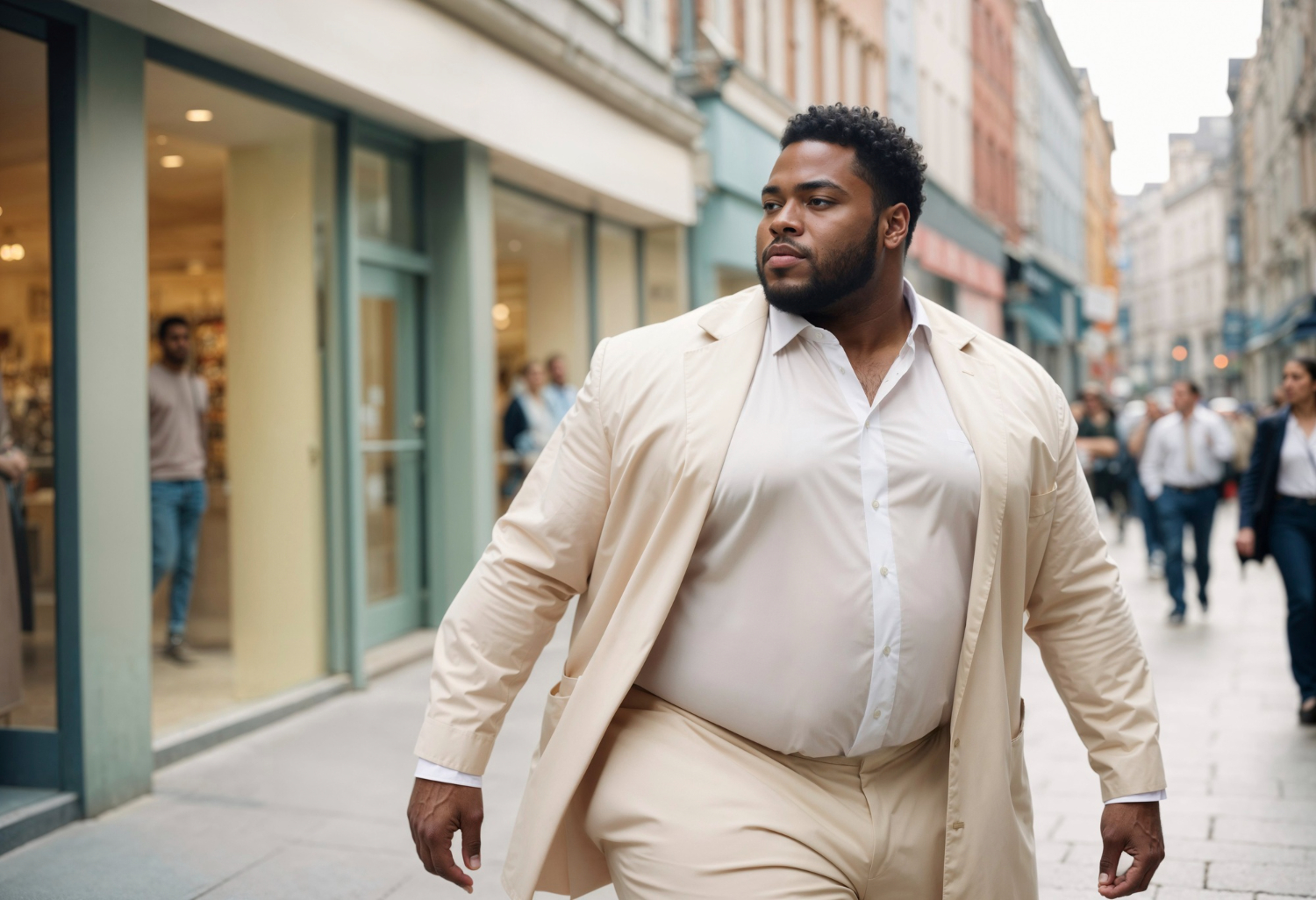
For broader or larger builds, the general goal shifts toward structured fabrics and strategic use of vertical lines, both of which help create a clean, elongated silhouette rather than emphasizing width.
Structured fabrics that hold their shape — a mid-weight cotton, a wool blend — generally look sharper than very soft, clingy materials. Fabric with some structure creates a cleaner line around the body, rather than draping in a way that closely follows every contour. This is a straightforward, practical fit consideration rather than a restriction — it’s simply about which fabrics create the cleanest overall silhouette.
Vertical lines help elongate the visual silhouette. A button placket running down the center of a shirt, a subtle pinstripe, or a jacket with clean vertical seaming all introduce visual lines that lengthen the eye’s read of the body, which tends to be flattering for broader or larger builds specifically.
Proper length matters more here than almost any other body type. A shirt or jacket that’s too short can emphasize width by cutting the body into a wider-looking horizontal segment, while proper length (ending around mid-zipper for shirts, for instance) maintains a cleaner vertical line throughout.
Well-fitted, rather than oversized, clothing tends to look sharper. It’s a common but mistaken instinct to size up for more room, but oversized clothing on a larger frame often adds visual bulk rather than hiding it. A properly fitted piece — not tight, but sized correctly for your actual measurements — generally creates a cleaner, more put-together silhouette than an oversized alternative.
What to be cautious with: Very large, bold patterns or horizontal stripes can sometimes emphasize width in a way that a smaller pattern or vertical element wouldn’t. This isn’t an absolute rule, but it’s worth being aware of the visual effect if a specific pattern doesn’t seem to be reading the way you’d hoped.
Shorter Men
For men on the shorter side, the overall goal is maintaining clean, consistent proportions throughout an outfit, since visual “breaks” in the silhouette can shorten the overall body line more than the actual height difference itself.
A higher-rise pant elongates the leg line. Pants that sit closer to the natural waist, rather than low-rise styles, create a longer visual leg line, which is one of the most effective and easy proportion adjustments available.
Keep jacket length proportionate — generally shorter rather than longer. A jacket that ends too low (mid-thigh or longer) can visually cut the body into two overly short segments, while a jacket ending around the hip maintains cleaner, more balanced proportions.
Avoid oversized layers that overwhelm the frame. This is one of the more universally applicable pieces of body-type advice — a very large, boxy jacket or an oversized sweater can overwhelm a shorter frame specifically, creating a silhouette where the clothing appears to be wearing the person rather than the reverse. A well-fitted, appropriately sized layer (not necessarily tight, just correctly proportioned) reads as more intentional.
Monochromatic or tonal outfits can help create a longer visual line. Since a strong color break at the waist (a very different-colored top and bottom) visually divides the body into two shorter segments, keeping colors within a similar tonal family from top to bottom creates a more continuous, elongated line.
What to be cautious with: Very baggy or oversized clothing across an entire outfit tends to work against these proportion goals more than almost any other adjustment. This isn’t about avoiding relaxed fits entirely — it’s specifically about avoiding a combination where every single piece is oversized at once, since that combination is what most reliably shortens the overall silhouette.
Taller Men
Taller men generally have more flexibility to experiment with proportion and layering than most other body types, simply because there’s more visual space for a silhouette to work with. That said, a few specific considerations are worth understanding.
Sleeve and pant length require extra attention. Off-the-rack clothing is frequently not cut long enough for taller frames, and ill-fitting length — sleeves that end well above the wrist, pants that sit noticeably above the ankle unintentionally, is one of the fastest ways to undercut an otherwise good outfit. This is worth checking carefully on every new purchase, since it’s the single most common fit issue taller men run into.
Proportion breaks (color changes, layering, texture shifts) can be used deliberately rather than avoided. Unlike shorter builds, where a continuous vertical line often helps, taller men can use a horizontal color break at the waist, a cropped jacket, or other bolder proportion choices without the same risk of looking visually shortened, simply because there’s more overall height to work with.
Layering tends to look particularly good on taller frames, since there’s enough visual space to showcase multiple distinct layers clearly without everything reading as bulky or crowded.
What to be cautious with: Very short, cropped pieces (jackets or pants that end noticeably higher than standard) can occasionally look disproportionate on a taller frame if the rest of the outfit doesn’t intentionally support that specific silhouette. This is more of an intentional style choice than an outright caution, but it’s worth being deliberate about rather than accidental.
Larger Builds (Beyond “Broad”)
For men with a larger overall build, many of the same principles from the broad-build section apply, with a few additional considerations specifically around fit and fabric choice.
Properly fitted (not oversized, not overly tight) clothing remains the single most important factor. This holds true across every body type covered in this guide, but it’s worth repeating specifically here, since sizing up for comfort is an especially common instinct for larger builds that often works against the goal of a clean, put-together silhouette.
Structured fabrics with a bit of weight to them tend to drape more cleanly than very lightweight or clingy materials. A mid-weight cotton or a wool-blend fabric holds its shape and creates a cleaner line than thin, flimsy fabric that closely follows every contour of the body.
Darker, more tonal color combinations tend to create a leaner overall silhouette, though this is a preference rather than a strict requirement — plenty of men in larger builds wear bold color and pattern successfully, particularly when the specific fit and structure principles above are addressed first.
Tailoring becomes especially valuable. Off-the-rack sizing often doesn’t account well for the specific proportions of a larger build, and a properly fitted piece — sleeves taken in slightly, a jacket’s waist adjusted — usually looks dramatically sharper than the same piece worn exactly as purchased.
Older Men
Age isn’t a body type in the same sense as the categories above, but it’s worth addressing specifically, since style priorities often shift somewhat as men get older, regardless of build.
Quality fabric and classic, clean silhouettes tend to age particularly well. A well-fitted crewneck, tailored trousers, and quality leather footwear rarely look dated, even years later, which makes them a particularly reliable foundation for older men who want a wardrobe that doesn’t require constant updating to stay looking current.
Leaning into timeless pieces rather than closely chasing younger, trend-driven fits generally reads better. This isn’t a hard rule against ever wearing something more current or trend-influenced — it’s simply an observation that very closely trend-chasing fits (extremely skinny cuts, for instance, or whatever specific silhouette happens to be trending among much younger demographics) often look less natural on an older man than a slightly more classic, timeless approach to the same general style goal.
Fit and grooming details matter as much as ever, if not more. As with every body type in this guide, properly fitted clothing reads as sharp and intentional regardless of age, and small grooming details — a well-pressed shirt, polished shoes — continue to carry significant weight in how put-together an outfit looks overall.
A Few Universal Principles That Apply Across Every Body Type
Regardless of which category above most closely matches your build, a few core ideas apply universally, and they’re worth reinforcing directly.
Fit matters more than any single body-type-specific recommendation. Properly fitted clothing — following the natural lines of your specific body, whatever that body’s proportions happen to be — will consistently outperform any specific “flattering cut” advice if the actual fit is wrong. This is genuinely the foundation everything else in this guide builds on.
These are starting points for understanding proportion, not restrictions on what you’re allowed to wear. Every recommendation above is meant to explain the reasoning behind certain choices — why a higher-rise pant elongates the leg, why structured fabric creates a cleaner line — not to tell you that certain items are off-limits. Plenty of men successfully wear pieces that fall outside their body type’s “typical” recommendations, particularly once they understand the underlying proportion principles well enough to make deliberate, informed choices rather than following a rigid checklist.
Confidence and comfort matter as much as any specific styling rule. If a particular fit or piece doesn’t feel like you, no amount of “flattering” advice will make it the right choice. The goal of understanding your body type is to give you more informed options, not replace your own judgment about what actually makes you feel good in your clothes.
How to Actually Apply This to Your Own Wardrobe
Start by identifying which category (or combination of categories) most closely describes your build. Many men are a blend of categories — athletic and tall, for instance, or slim and short — in which case the relevant principles from each applicable section combine, rather than needing to choose just one.
Audit a few current pieces against the relevant principles. Look at a jacket, a pair of pants, and a shirt you already own, and check them against the specific guidance for your build — proper length, appropriate structure, correct proportion. This often reveals why certain existing pieces already feel great, and why others have never quite felt right, without needing to buy anything new yet.
Prioritize tailoring on your most-worn pieces before buying anything new. As with several other guides in this series, tailoring is often the fastest, most cost-effective way to apply body-type-specific proportion adjustments to clothing you already own, rather than assuming you need an entirely new wardrobe to see a real difference.
Test new purchases against your specific proportion goals before buying. Once you understand what you’re generally looking for — more structure, a higher rise, a specific jacket length — you can evaluate new potential purchases more quickly and confidently, rather than guessing at fit the way you might have before understanding these underlying principles.
Frequently Asked Questions
What if I don’t fit clearly into just one body type category? Most men are a blend of several categories — tall and slim, athletic and broad, and so on. In these cases, combine the relevant advice from each applicable section rather than picking just one category exclusively; the underlying proportion principles generally combine logically without conflicting.
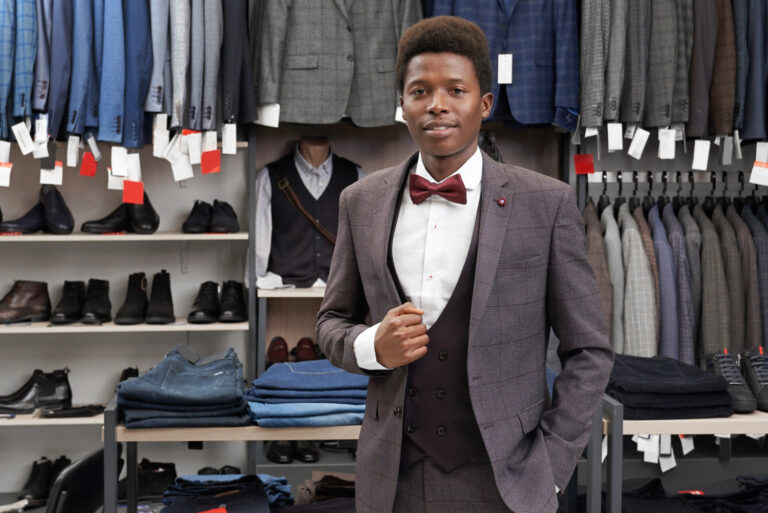
Does body type advice change between casual and formal clothing? The underlying proportion principles stay the same, but formal clothing (particularly tailored jackets and suits) tends to make body-type-specific fit issues more visible, simply because formal pieces are more structured and therefore show fit problems more clearly than very casual, loose-fitting clothing might.
How much of this can tailoring actually fix, versus needing to buy different pieces entirely? Tailoring can address a surprising amount — waist adjustments, sleeve and hem length, taking in excess fabric through the torso — but it can’t fundamentally change a garment’s overall cut or structure (an unstructured jacket can’t be tailored into a structured one, for instance). For issues beyond basic proportion adjustments, buying a differently structured piece is usually the better solution.
Is it true that certain colors are more flattering for certain body types? Color has more to do with skin tone than body type specifically, as covered in dedicated color-matching guides, though darker, more tonal combinations can create a slightly leaner visual silhouette regardless of body type, which is sometimes conflated with body-type-specific color advice.
Should I follow body type advice even if I genuinely love a style it recommends against? No — these recommendations are meant to inform your choices, not restrict them. If you love a specific style or fit that falls outside the “typical” recommendation for your build, wearing it confidently, with attention to overall fit and proportion, will generally look better than following a rule you don’t actually feel good about.
How does weight change over time affect this advice? The core principles remain useful regardless of body changes over time — fit, proportion, and structure matter at any size or shape. What changes is simply which specific category’s guidance applies most directly to your current build, which is worth revisiting periodically, as your body changes, the same way you’d revisit your wardrobe for any other reason.
Is it worth getting professionally measured to understand my body type better? It can be genuinely useful, particularly for pieces like blazers and dress shirts where precise chest, shoulder, and waist measurements make a noticeable fit difference. Many tailors and some retailers offer this as a free or low-cost service, and it removes a lot of the guesswork involved in finding correctly proportioned pieces.
Does this guide apply the same way to workout or athletic clothing? The core principles of proper fit and proportion still apply, but athletic clothing generally prioritizes functional fit (freedom of movement, moisture management) over the same aesthetic proportion goals covered in this guide, so some of the specific recommendations above are less directly relevant to that specific clothing category.
What’s the single most universally useful piece of advice in this entire guide? Properly fitted clothing outperforms almost any other single styling decision, regardless of body type. If you take away one idea, focus on getting your existing wardrobe properly fitted before worrying about any of the more specific proportion recommendations above.
How do I build confidence if I’ve spent years feeling unsure about dressing for my specific build? Start small — apply one or two of the relevant principles from this guide to pieces you already own, rather than attempting a complete wardrobe overhaul at once. Confidence tends to build gradually through small, successful adjustments, much more reliably than through a single dramatic wardrobe change.
Final Thoughts
Understanding your body type isn’t about discovering a list of things you can’t wear — it’s about understanding the reasoning behind fit and proportion well enough to make informed, confident choices for your specific frame.
Every principle in this guide comes back to the same core idea: balance, created through fit, structure, and proportion, rather than any rigid set of restrictions.
Start with one or two adjustments to pieces you already own, see how they feel, and build from there.
The goal isn’t a perfect wardrobe overnight — it’s a gradually growing understanding of what actually works for your body, so future decisions get easier every time.
Read also: