A Beginner’s Guide to Dressing Business Casual
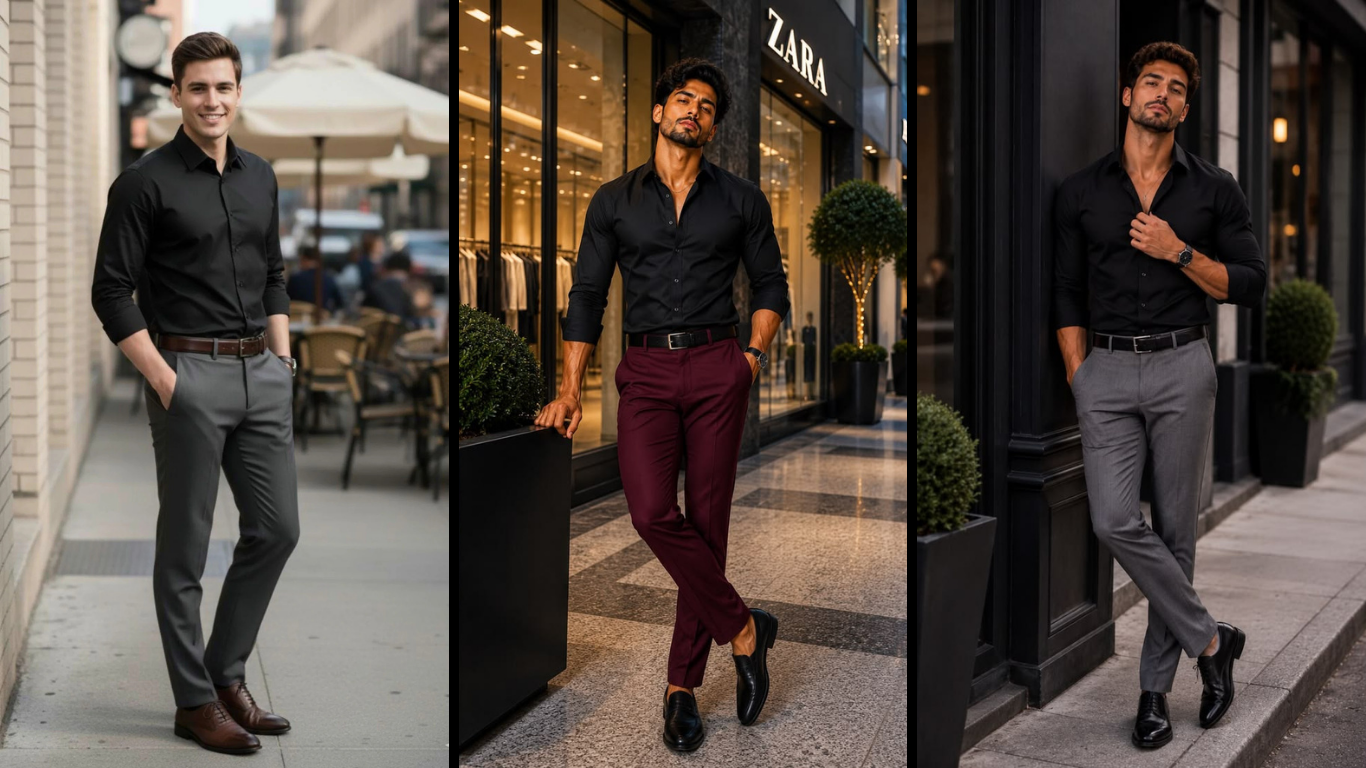
You’ve got a new job, or your office just relaxed its dress code, or maybe you’re headed into an internship or a client meeting, and the instruction you’ve been given is some version of “business casual.”
It sounds simple enough, but the moment you actually try to get dressed by that standard, it stops feeling clear at all.
Does business casual mean a suit without a tie? Jeans and a nice shirt? Somewhere in between?
The term gets used so loosely that it ends up meaning something slightly different at almost every company, which leaves a lot of men either overdressed, underdressed, or just anxious every single morning.
Business casual is genuinely one of the most confusing dress codes in modern menswear, mostly because it sits in a wide middle zone between full formal wear and true casual clothing, with no single universally agreed-upon definition.
The good news is that once you understand the underlying logic — what business casual is actually trying to communicate, and the specific building blocks that reliably satisfy it — dressing this way stops being a daily guessing game and becomes almost as automatic as any other dress code.
This guide is going to walk you through exactly that: what business casual really means, the specific pieces that make it work, how to read your particular office’s version of it, and how to build a small, reliable rotation so you’re never standing in front of your closet wondering if today’s outfit is going to be a mistake.
Read also: The Ultimate Guide to Layering Outfits for Fall
What Business Casual Actually Means (and Why It’s So Inconsistent)
Business casual exists as a middle ground between traditional business formal (suits, ties, dress shoes) and fully casual dress (jeans, t-shirts, sneakers). The idea is to look professional and put-together without the full formality — and expense — of a suit every day.
That’s the theory. In practice, individual offices interpret this middle ground very differently depending on industry, region, and even specific company culture.
A law firm’s version of business casual might still look close to a suit without a tie. A tech startup’s version might be closer to nice jeans and a collared shirt.
A financial services company might land somewhere firmly in the middle — dress pants and a blazer, no tie required.
None of these interpretations is wrong; they’re just different readings of the same broad term, which is exactly why “business casual” causes so much confusion for anyone new to a specific workplace.
One mistake I see repeatedly is men assuming there’s one correct business casual uniform they need to memorize, when the smarter approach is understanding the underlying principles well enough to read your specific office’s version of the standard and dress appropriately for it.
The Core Building Blocks of Business Casual
Regardless of exactly where your office lands on the formal-to-casual spectrum, a handful of core pieces show up in almost every reasonable interpretation of business casual.
Understanding these pieces — and why they work — gives you a foundation you can adjust up or down depending on your specific workplace.
Collared Shirts: The Anchor of Business Casual
A collared shirt is close to a universal requirement across nearly every version of business casual, and it’s worth understanding why.
A collar structures the neckline and reads as more considered than a crewneck t-shirt, even when the rest of the outfit is fairly relaxed.
This is the single piece most likely to appear in every business casual outfit, regardless of how formal or relaxed your specific office trends.
Button-up shirts (oxford cloth, poplin, or a light flannel depending on season) are the most traditional and widely accepted choice, working across nearly every business casual environment from conservative to relaxed.
Polo shirts, particularly in a slightly more structured knit rather than a very casual pique, work well in more relaxed business casual environments, though they read as more casual than a button-up and may not be appropriate in more traditional offices.
Dress Pants and Chinos: The Lower-Body Anchor
Below the shirt, business casual almost always calls for something more structured than jeans, though how strict this rule is again depends heavily on your specific office.
Dress pants (wool or a wool-blend, in navy, charcoal, or grey) sit at the more formal end of business casual, while chinos in similar neutral colors sit at the more relaxed end.
Both are widely acceptable core pieces, and having at least one of each gives you flexibility to dress up or down slightly within the same general dress code.
Dark, well-fitted jeans have become acceptable in a growing number of relaxed business casual environments, particularly in creative or tech-adjacent industries, but this is the piece most likely to vary by workplace — some offices genuinely welcome dark jeans as business casual, while others still consider them too casual regardless of fit or wash. This is worth confirming specifically for your workplace rather than assuming either direction.
Blazers and Sport Coats: The Formality Dial
A blazer or sport coat is one of the most useful tools in a business casual wardrobe because it functions almost like a dial — adding one instantly pushes an otherwise simple outfit toward the more formal end of business casual, while removing it lets the same base pieces read more relaxed.
An unstructured blazer in navy or grey, worn over a collared shirt, works for almost any interpretation of business casual and is often the single most versatile piece you can own for this dress code specifically.
Dress Shoes and Smart Casual Footwear
Footwear tends to be one of the stricter elements of business casual, even in otherwise relaxed offices. Leather oxfords, derbies, or loafers are safe, traditional choices across nearly every interpretation of the dress code.
Clean, minimal leather sneakers have become acceptable in a growing number of more relaxed business casual environments, though — similar to jeans — this varies significantly by workplace and is worth confirming rather than assuming.
Sandals, flip-flops, and athletic sneakers fall outside business casual in essentially every interpretation of the dress code, regardless of how relaxed the specific office trends elsewhere.
Reading Your Specific Office’s Version of Business Casual
Since business casual varies so much by workplace, the single most useful skill for anyone new to a specific office isn’t memorizing a fixed uniform — it’s learning to read the actual environment and calibrate accordingly.
Look at What the Most Senior, Well-Regarded People Wear
Rather than looking at what everyone in the office wears (which often includes people dressing more casually or more formally than the actual expected standard), pay specific attention to what well-respected, senior employees wear on a typical day.
This tends to reflect the office’s genuine expectation more accurately than the average of everyone in the building, since it represents people who’ve presumably calibrated their dress appropriately for the environment over time.
When in Doubt, Slightly Overdress Rather Than Underdress
If you’re new to an office and genuinely uncertain where the actual standard lands, it’s generally safer to dress slightly more formal than the average on your first days, then adjust downward once you’ve observed the actual norm.
It’s much easier to remove a blazer or leave a tie off going forward than to suddenly look underdressed relative to everyone else after already making a first impression.
Pay Attention to Client-Facing Versus Internal-Only Days
Many offices have an unspoken (or sometimes explicit) distinction between how people dress on days with client meetings versus days spent entirely internally.
If your role involves any client interaction, it’s worth understanding whether your office expects a formality bump on those specific days, since this is a common source of business casual confusion for people new to a role.
Notice Regional and Industry Patterns
Business casual standards vary meaningfully by region and industry, and it’s worth being aware of these broader patterns even as you calibrate to your specific office.
Financial and legal industries, along with certain regions, tend to skew toward the more formal end of business casual, while tech, creative, and startup environments — and certain other regions — tend to skew more relaxed.
Neither is universally correct, but understanding the general industry tendency helps you make a more informed first guess before you’ve had time to observe your specific workplace directly.
Building a Business Casual Wardrobe From Scratch
If you’re starting essentially from zero — a new job, a recent dress code change, or simply never having needed business casual clothing before — here’s a practical, prioritized approach to building the wardrobe efficiently.
Start With Versatile Neutral Basics
Navy, grey, white, and light blue form the foundation of almost every business casual wardrobe, since these colors coordinate easily with each other and rarely risk looking out of place in a professional setting. Building your first several pieces in this palette ensures that everything you buy early on will combine easily with whatever you add later.
Prioritize in This Order
First: two to three collared shirts. A white Oxford and a light blue Oxford cover the vast majority of business casual situations on their own, and both pair easily with almost any pants or jacket you’ll add afterward.
Second: one pair of dress pants and one pair of chinos. This gives you the flexibility to dress slightly up or down within business casual depending on the specific day, without needing an extensive pants rotation right away.
Third: one versatile blazer. Navy is generally the most flexible starting color, since it pairs easily with the widest range of shirts and pants you’re likely to already own or add next.
Fourth: one pair of leather dress shoes or loafers. Brown or black both work, though black tends to be slightly more universally appropriate across a wider range of offices, particularly more traditional or formal-leaning ones.
Fifth: expand gradually from there. Once this core is in place, you can add a second blazer, a few more shirt colors, or a slightly more casual shoe option based on how your specific office actually dresses, rather than guessing upfront at pieces you might not end up needing.
Get Key Pieces Properly Fitted
As with every dress code, fit matters enormously in business casual specifically because there’s less room for error — a poorly fitted blazer or a pair of pants that bunch at the ankle reads as noticeably unprofessional in a way that the same fit issue might not in a purely casual outfit. It’s worth getting at least your blazer and dress pants properly tailored, since these two pieces carry an outsized share of the overall professional impression.
Putting Together Actual Business Casual Outfits
Here are several reliable combinations across the formal-to-casual range within business casual, so you have concrete starting points as you build out your own rotation.
More formal end: A white or light blue dress shirt, charcoal or navy dress pants, a navy blazer, and black leather oxfords or derbies. This combination works for client meetings, presentations, or offices that lean more traditional.
Middle of the range: A collared shirt (button-up or a structured polo), chinos in a neutral color, and leather loafers, with a blazer optional depending on the specific day and office norm. This is a reliable everyday combination for most moderate business casual environments.
More relaxed end: A well-fitted collared shirt or structured polo, dark jeans (in offices where this is confirmed acceptable) or chinos, and clean leather or suede sneakers. This works well for more relaxed tech or creative offices, particularly on days without client interaction.
Seasonal Adjustments Within Business Casual
Business casual doesn’t pause for the seasons, which means understanding how to adjust the same core pieces for temperature is worth covering specifically.
Warmer months call for lighter-weight fabrics — cotton, linen blends — in the same collared shirts and chinos, along with short-sleeve button-ups in more relaxed offices. A lightweight blazer in cotton or a linen blend can still work for client meetings without the discomfort of a full wool jacket in the heat.
Cooler months allow for a sweater layered under a blazer, or a quarter-zip sweater worn on its own on more relaxed days, along with heavier wool or wool-blend dress pants and a wool overcoat for the commute. This is also where a well-chosen scarf can add a small amount of personal style without stepping outside business casual norms.
Common Business Casual Mistakes and How to Fix Them
Treating business casual as “whatever isn’t a full suit.” This overly broad interpretation often leads to outfits that are actually too casual for the specific office — an old t-shirt and jeans doesn’t become business casual just because it’s not a suit. Business casual still requires a collared shirt and generally more structured pants at a minimum, even in relaxed interpretations.
Wearing an ill-fitting blazer because it technically fulfills the “jacket” requirement. A blazer that’s clearly too big or too small undercuts the entire outfit, since fit issues are especially noticeable on structured pieces like jackets. It’s worth investing specifically in a well-fitted blazer rather than treating this piece as an afterthought.
Ignoring your specific office’s actual norms in favor of a generic definition. As covered above, business casual varies enormously by workplace, and dressing according to a generic definition rather than your actual office’s observed standard is one of the most common sources of feeling out of step with everyone else.
Underestimating the importance of footwear. Worn-out or overly casual shoes can undercut an otherwise appropriate business casual outfit faster than almost any other single piece, since footwear tends to be one of the stricter, more closely observed elements of this particular dress code.
Forgetting that business casual still benefits from color coordination and fit principles. Just because an outfit satisfies the technical requirements of business casual (collared shirt, structured pants) doesn’t mean color and fit stop mattering. The same coordination principles that apply to any other outfit — neutral bases, avoiding too many competing colors, proper fit throughout — still apply here.
Business Casual for Specific Situations
Job interviews. When uncertain, it’s generally safer to dress slightly more formal than you expect the office’s daily standard to be, since an interview is a first impression rather than a typical workday. A full suit isn’t necessary for most business casual interviews, but leaning toward the more formal end of business casual (blazer, dress pants, tie optional) is a reasonable default.
Client meetings and presentations. Lean toward the more formal end of your office’s business casual range specifically for these situations, even if your everyday internal dress code is more relaxed, since client-facing days often carry a slightly higher implicit expectation.
Casual Fridays within a business casual office. This typically means shifting toward the more relaxed end of your office’s business casual range — perhaps swapping a blazer for just a collared shirt, or moving from dress pants to chinos — rather than jumping all the way to fully casual clothing, unless your specific office has explicitly confirmed that Casual Friday allows for jeans and more relaxed footwear.
Travel for work. Business casual travel calls for the same core pieces, ideally in wrinkle-resistant fabrics, along with comfortable but still appropriate footwear for the travel day itself, shifting into your standard business casual rotation once you’ve arrived.
Building Confidence Within Business Casual Over Time
Business casual can feel restrictive at first, especially compared to the freedom of dressing casually on your own time, but it becomes considerably easier once you’ve built a small, reliable rotation and had time to observe your specific office’s actual norms. The goal isn’t memorizing a rigid uniform — it’s understanding the underlying logic (a collared shirt, structured pants, and a blazer as your formality dial) well enough that you can calibrate confidently to whatever specific version of business casual your workplace expects.
Frequently Asked Questions
Can I wear a tie with business casual, or does that push it into full business formal? A tie generally isn’t required for business casual and can sometimes read as overdressed in more relaxed offices, though it’s not incorrect in more traditional business casual environments, particularly for client-facing days. If you’re unsure, it’s safer to have one on hand for meetings specifically, rather than wearing one as your daily default.
Are short-sleeve dress shirts acceptable for business casual? This varies significantly by office and industry. Some more relaxed environments accept short-sleeve button-ups, particularly in warmer climates or seasons, while more traditional offices generally expect long sleeves regardless of temperature. Observing your specific office’s summer norms is the most reliable way to answer this for your own workplace.
Is it ever appropriate to wear a t-shirt under a blazer for business casual? In more relaxed, creative, or tech-oriented offices, a well-fitted plain t-shirt under an unstructured blazer can work as a more casual take on business casual, though this leans toward the most relaxed end of the dress code and isn’t appropriate everywhere. A collared shirt remains the safer default in most business casual environments, especially when you’re still learning your specific office’s norms.
How many blazers do I actually need for a functional business casual wardrobe? One versatile navy or grey blazer is genuinely enough to start, since it pairs with the widest range of shirts and pants. A second blazer in a different neutral color is a reasonable addition once your core wardrobe is established, but it’s not a first-priority purchase.
What’s the difference between business casual and “smart casual”? The two terms overlap significantly and are sometimes used interchangeably, though smart casual generally allows for slightly more casual footwear and fabric choices — think a nice t-shirt or fitted sweater without necessarily requiring a collar — while business casual usually still expects a collared shirt as a baseline. When an invitation or dress code specifically distinguishes between the two, smart casual is typically the slightly more relaxed of the two standards.
Can sneakers ever be appropriate for business casual? Clean, minimal leather or suede sneakers have become acceptable in a growing number of relaxed business casual offices, particularly in tech and creative industries, though this varies enormously by workplace. Traditional canvas or athletic sneakers generally remain outside business casual regardless of how relaxed the office otherwise trends.
How do I handle business casual dress codes during a heat wave or extreme cold? Prioritize breathable fabrics (cotton, linen blends) in hot weather and layering (sweaters, overcoats) in cold weather, while keeping the same core structure — collared shirt, structured pants — intact. Business casual doesn’t typically bend for weather, but fabric weight and layering absolutely should adjust seasonally.
Is it okay to repeat the same business casual outfit multiple times in a week? Yes, generally more so than with more casual weekend dressing, since office environments tend to notice outfit repetition less than social settings do, and a smaller, well-coordinated business casual rotation is a completely reasonable and common approach.
What should I do if I’m still unsure about my specific office’s exact standard after observing for a while? It’s reasonable to ask a trusted colleague directly, particularly someone in a similar role who’s been at the company longer. Most people are happy to clarify dress code expectations directly, and it’s a far more reliable source of information than guessing based on a generic definition of business casual.
How strict is business casual compared to full business formal, really? Business casual generally allows meaningfully more flexibility in color, fabric, and specific pieces (chinos instead of dress pants, no tie required, a wider range of acceptable footwear) while still expecting a baseline level of structure and polish that fully casual dressing doesn’t require. Think of it less as “casual with a business label” and more as “a relaxed, flexible version of professional dress,” which is a more accurate mental model than either extreme.
Final Thoughts
Business casual feels confusing, mostly because it’s genuinely inconsistent from one workplace to the next, not because there’s some secret standard you haven’t learned yet.
Once you understand the core building blocks — a collared shirt, structured pants, a blazer as your formality dial, and appropriate footwear — you have a flexible foundation that adjusts to whatever specific version of business casual your office expects.
Build a small, well-coordinated rotation, pay attention to how your most respected colleagues actually dress, and give yourself a little time to calibrate. The uncertainty fades quickly once you have a system to fall back on.
Read also: