How to Transition Your Summer Outfits Into Fall
Every year around the same time, the same wardrobe problem shows up: it’s still warm enough in the afternoons that a heavy sweater feels like overkill, but the mornings and evenings have started to carry that first real chill.
Your closet is still full of summer clothes, your fall pieces haven’t fully come out of storage yet, and getting dressed starts to feel like guesswork again — something that felt automatic just a few weeks earlier.
Most men handle this awkward stretch one of two ways.
Either they keep wearing their summer wardrobe well past its comfortable window, showing up underdressed and cold more often than they’d like to admit, or they jump straight to full fall gear too early, overheating in a sweater and jacket on an afternoon that’s still pushing seventy degrees.
Neither approach actually works, because both treat the transition as an on-off switch instead of what it actually is: a gradual shift that rewards a slightly different strategy than either full summer or full fall dressing.
Transitioning summer outfits into fall doesn’t require replacing your entire wardrobe the moment the calendar changes.
It requires understanding which of your existing summer pieces still have a role to play, which new pieces bridge the gap most efficiently, and how to layer and combine things so you’re comfortable across a wider temperature range without looking like you got dressed in the dark.
This guide walks through exactly how to make that shift smoothly, piece by piece.
Why This Particular Transition Trips Up So Many Men
Every seasonal transition involves some adjustment, but summer-to-fall is uniquely tricky for one specific reason: the temperature range within a single day gets genuinely wide during this stretch.
A morning commute at 55 degrees and an afternoon that climbs into the mid-to-upper 60s or even 70s is common in early fall, which means a single, fixed outfit rarely works well for the entire day the way it did in the more consistent heat of summer.
This is different from the winter-to-spring transition, where the overall trend is more steady in one direction (getting warmer) rather than swinging widely within a single day.
Fall’s inconsistency is exactly why a layering-first mindset, rather than a full wardrobe swap, works so much better during this specific window.
One mistake I see repeatedly is men assuming the fix is simply buying an entirely new fall wardrobe the moment temperatures start dropping.
In reality, a large portion of your summer wardrobe is still useful — it just needs to be recontextualized as a base or mid layer rather than a standalone outfit, with a small number of new pieces added specifically to bridge the gap.
The Core Strategy: Recontextualize, Don’t Replace
The single most useful mental shift for this transition is recognizing that most summer clothing doesn’t stop being useful in fall — it just changes role.
A short-sleeve button-up that worked as a standalone shirt all summer can become a mid-layer under a light jacket in early fall.
A lightweight t-shirt that worked alone in July becomes a base layer under a sweater or overshirt by October.
Nothing about the piece itself has to change; only its position in the outfit does.
This reframing solves two problems at once. It saves you from unnecessary spending, since you’re building on top of what you already own rather than replacing it.
And it also means your transitional wardrobe stays more versatile overall, since pieces that can serve double duty — standalone in warm weather, layered in cool weather — are inherently more valuable than pieces that only work in one context.
Which Summer Pieces Genuinely Carry Over
Not every summer item transitions well, so it’s worth being specific about which categories carry the most fall value and which ones are better left for next summer.
T-Shirts and Lightweight Tees: The Easiest Carryover
A well-fitted cotton t-shirt in a neutral color is one of the most seamless pieces to carry from summer into fall, simply by shifting its role from standalone shirt to base layer. The same white, grey, or navy tee that worked alone with shorts in July works just as well under a flannel overshirt or a lightweight sweater in September and October. This is the single easiest win in the entire transition, and it means you likely already own several pieces that don’t need replacing at all.
Short-Sleeve Button-Ups: A Slightly Trickier Carryover
A short-sleeve collared shirt can work into early fall, particularly layered under a light jacket or sweater vest on cooler days, though it becomes less useful as temperatures drop further, since the exposed forearms stop being comfortable.
Treat these as an early-fall bridge piece rather than something that’ll carry you through the whole season.
Chinos and Lighter-Weight Trousers: Full Carryover With a Color Shift
Chinos in a mid-weight cotton generally work fine straight through fall without any material changes needed.
What often does shift is color — lighter summer shades like white, pale khaki, or light blue tend to give way to deeper tones like olive, charcoal, and darker khaki as the season progresses, both because darker colors feel more visually aligned with fall and because they show dirt and wear less noticeably during a season with more rain and mud.
Shorts: Limited Carryover, Mostly Regional
Shorts have the shortest carryover window of any summer category, and how far they extend into fall depends heavily on your climate.
In milder regions, shorts can reasonably continue into early fall for casual daytime wear, but they’re generally the first piece to get retired as the season progresses, since there’s no layering trick that meaningfully extends a shorts-based outfit’s temperature range the way there is for tops.
Linen and Very Lightweight Fabrics: Best Retired Until Next Summer
Linen and other very lightweight, breathable fabrics are specifically designed for heat management, and they tend to look and feel out of place once temperatures cool meaningfully, both because they don’t provide much warmth and because their visual lightness clashes with the generally heavier, richer textures that fall in favor.
These are usually better stored away once the transition is well underway, rather than forced into a season they weren’t built for.
The Small Number of New Pieces That Bridge the Gap Most Efficiently
Rather than an entire new wardrobe, a handful of specific pieces do most of the heavy lifting for this transition, because they’re built specifically to work in a range of temperatures rather than one fixed condition.
An Overshirt or Shirt-Jacket
This is probably the single most useful addition for the summer-to-fall transition.
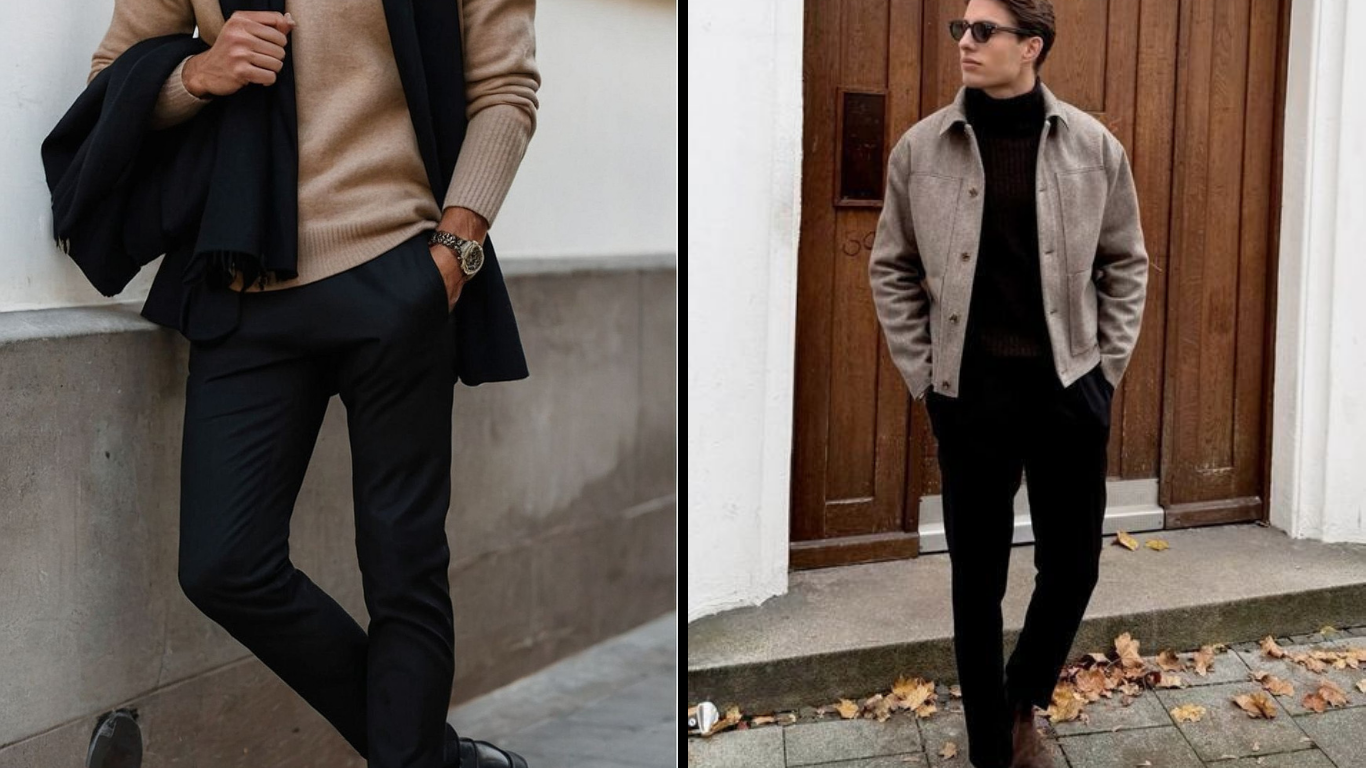
An overshirt in a mid-weight cotton, flannel, or corduroy works as a light jacket on its own on mild days, layers easily over a t-shirt on cooler days, and can be worn open over a short-sleeve shirt on days that still swing warm in the afternoon.
Few single pieces flex across this wide a temperature range as effectively.
Read also: How to Dress Sharp on a Tight Budget
A Lightweight Crewneck or Quarter-Zip Sweater
A sweater in a lighter-weight cotton or a fine-gauge wool works well specifically because it’s warm enough for cooler mornings without being so heavy that it becomes uncomfortable once the afternoon warms up.
This is a meaningfully different piece from a heavy winter sweater — the goal here is a transitional layer, not full winter insulation.
A Field Jacket or Light Trucker Jacket
An unlined or lightly lined jacket in this category provides wind protection and a bit of structure without the bulk of a full winter coat, making it ideal for the specific temperature range this transition covers.
It’s also versatile enough to wear open over a summer-weight tee on warmer days or closed over a sweater as temperatures drop further.
A Slightly Heavier Pair of Chinos or Dark Denim
If your summer wardrobe leaned heavily on very lightweight cotton or linen trousers, adding one pair of slightly heavier-weight chinos or a pair of dark denim jeans gives you an option for cooler days without needing to overhaul your entire bottom-half wardrobe.
Building Transitional Outfits: A Practical Framework
Rather than treating each day as a brand-new outfit decision, it helps to think of this transitional period in terms of three temperature zones, each with its own simple formula.
Zone One: Still Genuinely Warm (Upper 70s and Above)
On days that are still functionally summer temperatures, keep wearing your summer wardrobe largely as-is. There’s no benefit to forcing a jacket or sweater onto a day that doesn’t call for one just because the calendar says fall. A t-shirt or short-sleeve shirt, lighter chinos or shorts if your climate allows, and your usual summer footwear remain the right call here.
Zone Two: The Genuine In-Between (Mid-60s to Mid-70s)
This is where the bridge pieces earn their keep. A t-shirt as your base, an unbuttoned overshirt or light jacket added on top (easily removed if the afternoon warms further), and chinos or jeans cover the vast majority of days in this range comfortably.
This zone is also where the biggest temperature swings within a single day tend to happen, which is exactly why an easily removable layer — rather than a single fixed heavier piece — makes the most sense.
Zone Three: Genuinely Cool (Below 60, Especially Mornings and Evenings)
Once temperatures drop into genuinely cool territory, it’s worth shifting to the fuller three-layer system covered in fall layering guides more broadly: a base layer (often still one of your summer tees), a mid layer (a sweater or heavier overshirt), and an outer layer (a field jacket or, on the coldest days, a wool overcoat). By this point, you’re solidly into fall dressing rather than transitional dressing, and the summer-specific carryover pieces mostly shift into a supporting, base-layer role.
Color and Texture Shifts Worth Making Gradually
Beyond swapping specific pieces, the overall palette and texture of an outfit tends to shift gradually through this transition, and understanding why you helps make these changes deliberately rather than just following an ill-defined seasonal instinct.
Lighten to darken, gradually. Summer wardrobes often lean toward whites, light blues, and pale neutrals, which reflect heat and feel visually aligned with bright summer light.
As the season shifts, gradually introducing deeper tones — navy, olive, burgundy, charcoal — into your rotation aligns the outfit with fall’s changing light and cooler temperatures, without requiring an abrupt, all-at-once wardrobe swap.
Smooth to textured, gradually. Summer fabrics tend to be smoother and more lightweight — cotton poplin, linen, lightweight jersey. Fall favors more textured materials — flannel, corduroy, heavier knits, waxed or brushed cotton — both for warmth and because texture adds visual richness that suits the season’s generally deeper color palette.
Introducing one or two textured pieces (a corduroy shirt, a flannel overshirt) alongside your existing smoother summer pieces is often enough to shift the overall feel of an outfit without needing to replace everything at once.
Footwear: The Overlooked Part of This Transition
Footwear often gets left out of seasonal transition planning, but it’s one of the most noticeable elements of an outfit and deserves the same gradual, deliberate shift as the rest of your wardrobe.
Canvas sneakers and sandals are the first to feel out of place once temperatures drop, both because they’re less practical in cooler, wetter conditions and because they visually read as distinctly summer footwear.
Leather or suede sneakers carry over well from summer into fall without needing any change at all, since they’re relatively season-neutral and pair easily with both lighter and heavier outfits.
Chukka boots, chelsea boots, and other leather boots are worth introducing specifically for this transition, since they handle the wider range of fall weather (including the occasional rain) far better than summer-weight footwear, while still looking sharp with the same chinos or jeans you’ve been wearing all along.
Common Mistakes During This Transition
Committing to full fall gear too early. Wearing a heavy sweater and jacket on a day that’s still pushing 75 degrees is uncomfortable and usually more about impatience for the new season than actual temperature logic. Let the genuine temperature, not the calendar date, guide the zone-based approach covered above.
Clinging to full summer gear too long. The opposite mistake is just as common — continuing to wear shorts and short-sleeve shirts well past the point where mornings and evenings have turned genuinely cold, leading to being visibly underdressed and uncomfortable more often than necessary.
Ignoring the “removable layer” principle. During the widest-swing weeks of this transition, a single, non-removable heavy piece often leaves you either too warm in the afternoon or too cold in the morning. An easily removable overshirt or light jacket solves this far better than a fixed, heavier single garment.
Overhauling color and texture all at once. Shifting your entire palette from light summer tones to deep fall tones in a single shopping trip can feel disjointed and is also unnecessary. A gradual shift — introducing one or two deeper-toned or more textured pieces at a time — tends to look and feel more natural, and it’s easier on a budget besides.
Forgetting that base layers can carry over even when outer layers can’t. It’s easy to assume an entire summer outfit needs replacing once fall arrives, when often it’s really just the outer layer that needs to change, while the t-shirt or shirt underneath continues working exactly as it did all summer, just in a new role.
Building a Small Transitional Capsule
Rather than either keeping your full summer wardrobe untouched or jumping straight into a full fall wardrobe, it’s worth thinking specifically about a small transitional capsule — a handful of pieces chosen specifically for their ability to bridge both seasons.
A simple transitional capsule might include:
- 3–4 existing summer t-shirts, now repurposed as base layers
- 1–2 existing short-sleeve or lightweight button-ups for early-fall bridge days
- 1 overshirt or shirt-jacket, newly added
- 1 lightweight crewneck or quarter-zip sweater, newly added
- 1 field jacket or light trucker jacket, newly added
- Existing mid-weight chinos, plus one pair of jeans if not already owned
- Existing leather or suede sneakers, plus one pair of boots, newly added
Notice that only four items on this list are genuinely new purchases — the rest is your existing summer wardrobe, recontextualized into a new role. This is the actual practical payoff of the “recontextualize, don’t replace” strategy: a relatively small, targeted investment bridges the entire transition, rather than requiring a wholesale wardrobe replacement.
Shopping Strategically for the Handful of New Pieces You Do Need
Prioritize the overshirt and jacket first. These two categories do the most work across the widest temperature range, and they’re the pieces most likely to have no real summer equivalent already in your closet.
Choose transitional-weight pieces specifically, not full winter weight. A heavy wool sweater or a fully insulated winter coat is overkill for this specific window and will leave you overheating on the still-warm afternoons this transition regularly includes. Look specifically for lighter-weight or unlined options in these categories.
Stick to versatile neutral colors for anything new. Since these new pieces need to coordinate with an existing summer wardrobe that likely leans light and neutral, choosing new fall pieces in navy, olive, grey, or brown ensures they’ll pair easily with what you already own, rather than requiring an entirely new supporting cast of pieces around them.
Frequently Asked Questions
How do I know when it’s actually time to start this transition, rather than just going by the calendar? Pay attention to your actual daily temperature range rather than the date. Once mornings and evenings consistently drop into the 50s while afternoons stay milder, you’re in the genuine transitional window regardless of what the calendar says, and the zone-based approach becomes relevant.
Can I keep wearing sandals or open-toe shoes into early fall? In milder climates, lightly into early fall on genuinely warm days, but this is one of the fastest categories to feel out of place once temperatures drop meaningfully, both for comfort and visual reasons. Most men are better off transitioning to closed-toe leather or suede sneakers relatively early in this process.
Is it worth buying an entirely new color palette for fall, or can I keep my summer colors? You can keep your existing summer colors and simply add a few deeper tones alongside them rather than replacing the palette outright. A white t-shirt still works fine in fall as a base layer; it’s the newly added pieces — an overshirt, a jacket — that benefit most from leaning into deeper, more fall-appropriate colors.
What’s the single most versatile new piece to buy for this transition? An overshirt in a mid-weight cotton or flannel is generally the most versatile single addition, since it functions as a standalone light jacket, a mid-layer under a heavier coat, and an open layer over a summer tee, covering the widest range of the transitional temperature window on its own.
Do I need a completely different set of pants for fall, or can chinos carry over? Mid-weight chinos generally carry over with no material change needed. What typically shifts is color — moving from lighter summer shades toward deeper tones like olive or charcoal — rather than needing an entirely different fabric or cut.
How should I handle layering if I run warm and overheat easily during this transition? Lean more heavily on easily removable layers — an overshirt you can take off entirely rather than a pullover sweater — and prioritize lighter-weight transitional pieces over anything resembling full winter weight, since your comfort range during this specific window still involves genuinely warm afternoons.
Should I do this transition all at once or gradually over several weeks? Gradually is both more comfortable and more visually cohesive. Trying to shift your entire wardrobe, palette, and texture profile in a single week often looks and feels disjointed, whereas introducing one or two new transitional pieces at a time lets your wardrobe evolve naturally alongside the actual weather.
What summer pieces should I plan to store away completely rather than trying to carry over? Linen and other very lightweight, breathable fabrics, along with shorts and sandals, generally have the shortest useful window into fall and are usually better stored away once the transition is genuinely underway, rather than forced into outfits they weren’t designed for.
Is there a risk of over-layering during this specific transitional window? Yes — this is actually one of the more common mistakes during this specific stretch, since men eager for fall sometimes stack a sweater and a heavy jacket on a day that’s still fundamentally warm in the afternoon. The zone-based framework above is specifically designed to prevent this by matching your layering commitment to the actual temperature range of the day.
How do I keep this transition from feeling expensive? Focus your spending on the small number of genuinely new bridge pieces — typically an overshirt, a lightweight sweater, and a jacket — and lean on the “recontextualize, don’t replace” principle for everything else. Most of your existing summer wardrobe still has a role to play; it just needs a new position in the outfit rather than a replacement.
Final Thoughts
The shift from summer to fall doesn’t have to mean overhauling your entire wardrobe or living in that uncomfortable in-between zone where nothing quite feels right.
Most of what you already own is still useful — it just needs to shift roles, moving from a standalone summer outfit into a base or mid layer for the cooler months ahead.
Add a small handful of genuinely versatile bridge pieces, pay attention to the actual temperature rather than the calendar, and let the rest of the transition happen gradually, one outfit at a time.
Read also: