Men’s Fashion Mistakes: 15 Errors Killing Your Style

Here’s something worth sitting with: most poorly dressed outfits aren’t missing anything. They’re not lacking a designer piece, a trendy accessory, or a bigger budget.
They’re undone by one or two small, fixable errors — a shirt that’s a size too big, shoes that haven’t seen polish in months, an outfit mixing three formality levels at once.
That’s actually good news. If bad outfits usually come down to a handful of specific mistakes, then avoiding those same mistakes gets you most of the way to dressing well — no trend-chasing or wardrobe overhaul required.
Quick answer: The most common men’s fashion mistakes are wearing oversized clothing for “comfort,” neglecting shoe condition, mismatching formality levels (like sneakers with a suit), overaccessorizing, ignoring fabric-to-season matching, and skipping basic tailoring. Most are fixable in minutes and cost little or nothing to correct.
Below is a breakdown of the mistakes that do the most damage, why they happen, and exactly what to do instead.
Fit Mistakes
Fit issues are the most common and most visible mistakes in menswear — and they’re often the easiest to fix.
Mistake 1: Buying Clothes Too Big “for Comfort”
This is the single most frequent styling error. Sizing up feels safer — less risk of something being too tight — but the result is almost always the opposite of what people intend. Excess fabric at the shoulders, torso, and sleeves reads as sloppy rather than comfortable, and it obscures your actual shape rather than flattering it.
Why it happens: Discomfort with a closer fit, often from wearing oversized clothing for years without a reference point for how correct fit should feel.
The fix: Learn the basic fit checkpoints — shoulder seams at the shoulder edge, about an inch of room at the chest, sleeves ending at the wrist bone — and try on a size down from your usual if you consistently have excess fabric.
Mistake 2: Ignoring Shoulder Fit on Jackets
Shoulder fit is the hardest and most expensive part of a jacket to alter, yet it’s the part most men ignore when trying on a blazer or coat.
Why it happens: Shoulder problems are less obvious than a tight waist or long sleeve, so they get overlooked in the fitting room.
The fix: Check the shoulder seam first, before anything else. If it doesn’t sit at the edge of your shoulder bone, the jacket isn’t the right size — regardless of how the rest fits.
Read also: How to Style a White T-Shirt Five Different Ways
Mistake 3: Never Getting Anything Tailored
Off-the-rack clothing is cut for average proportions, not individual bodies. Skipping tailoring entirely means living with fit compromises that a $15–20 adjustment could solve.
The fix: Build a relationship with a local tailor for hems, waist adjustments, and sleeve shortening. This is one of the highest-value, lowest-cost improvements available.
Formality and Coordination Mistakes
Mistake 4: Mixing Formality Levels Without Intention
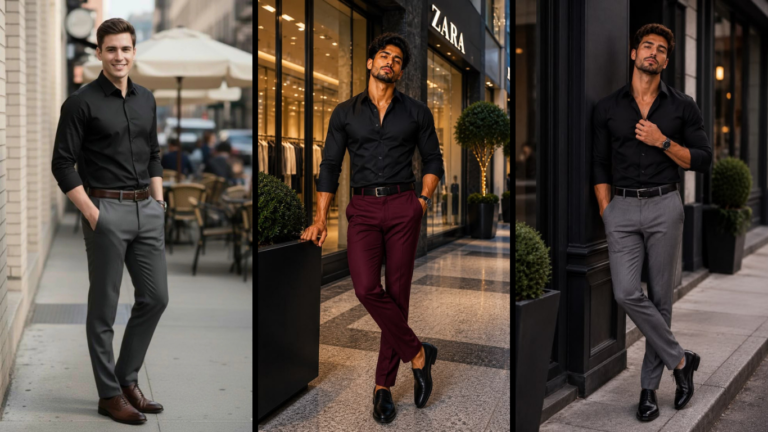
Pairing dress shoes with athletic wear, or running shoes with a full suit (unless done deliberately and well), creates visual tension because the outfit is sending two different signals about how much effort was put in.
Why it happens: Comfort-driven substitutions — swapping dress shoes for sneakers on a long day, for example — without adjusting anything else in the outfit.
The fix: If you’re changing the formality of one piece, adjust at least one other element to match. Swapping in sneakers works better alongside a more relaxed blazer and trouser than with a fully tailored suit.
Mistake 5: Overaccessorizing
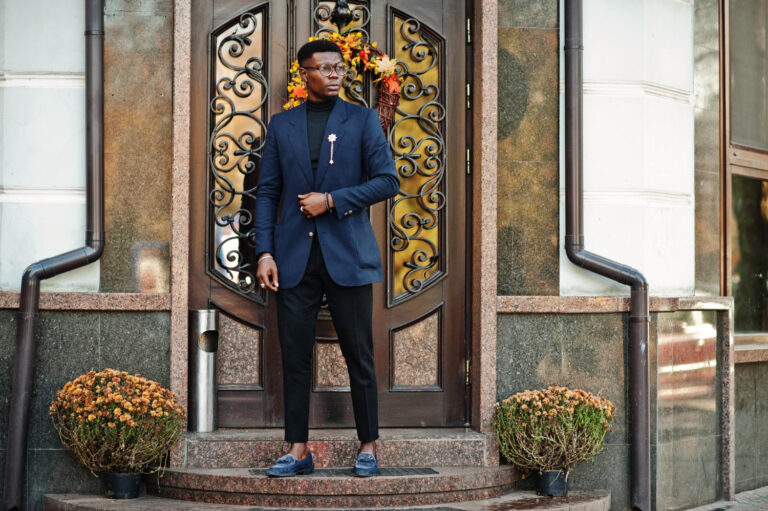
One or two accessories (a watch, a simple bracelet, a pocket square) read as intentional. Five competing pieces read as cluttered and undercut an otherwise clean outfit.
The fix: Pick a maximum of two accessories per outfit, and make sure they don’t compete for attention with each other (avoid multiple bold pieces at once).
Mistake 6: Mismatched Belt and Shoe Leather
Wearing a matte black belt with glossy brown shoes, or mixing leather finishes inconsistently, is a small detail — but it’s one that reads as an oversight the moment someone notices it.
The fix: Match belt and shoe color and finish (matte with matte, polished with polished) whenever possible, especially in business or business-casual settings.
Color and Pattern Mistakes
Mistake 7: Too Many Competing Colors or Patterns
An outfit with more than two or three colors — or multiple bold patterns at once — often looks chaotic rather than intentional, even when each individual piece is nice on its own.
Why it happens: Buying pieces independently, based on how they look alone, rather than considering how they’ll combine with the rest of the wardrobe.
The fix: Build outfits around 2–3 colors, with one pattern maximum unless you’re deliberately experimenting with pattern mixing (which requires more practice to get right).
Mistake 8: Building a Wardrobe Around Statement Pieces
A bold, unusual piece (a bright colored jacket, an loud printed shirt) looks great in isolation and becomes a coordination headache in practice, because it doesn’t pair easily with anything else.
The fix: Establish a base of neutral colors first — navy, grey, white, black, tan — and add statement pieces afterward, in small doses.
Mistake 9: Ignoring Undertone and Skin Tone
Not every color works equally well on every person. Colors that clash with your undertone can make an outfit look slightly “off” even when the fit and coordination are otherwise correct.
The fix: Pay attention to which colors consistently draw compliments or make you look more rested — this is a more reliable guide than any generic color chart.
Fabric and Seasonal Mistakes
Mistake 10: Wearing the Wrong Fabric Weight for the Season
Heavy wool in summer or thin linen in the dead of winter undermines an outfit’s function and appearance, regardless of how well it fits or coordinates.
The fix: Match fabric weight to season deliberately — lightweight cottons and linens for warm weather, wool and heavier knits for cold weather — rather than wearing the same fabrics year-round.
Mistake 11: Ignoring Fabric Quality on Frequently Worn Items
Thin, low-quality fabric on items worn often (t-shirts, everyday trousers) tends to lose shape and look worn out faster, which affects the appearance of an outfit even when the fit and color are correct.
The fix: Prioritize fabric quality on high-rotation items, even if it means owning fewer of them.
Grooming and Maintenance Mistakes
Mistake 12: Neglecting Shoe Condition
Scuffed, unpolished, or visibly worn shoes undercut an otherwise sharp outfit faster than almost any other single factor — because shoes are one of the first details people notice.
The fix: Keep a basic shoe care kit (polish, brush, cloth) and maintain leather shoes regularly rather than only addressing wear once it’s severe.
Mistake 13: Inconsistent Grooming Relative to Outfit Effort
An impeccably put-together outfit paired with unkempt facial hair, overgrown nails, or visibly neglected hair creates a mismatch that registers even if people can’t immediately identify why.
The fix: Treat grooming as part of the outfit, not a separate category — a trimmed, consistent look supports the effort put into clothing choices.
Mistake 14: Applying Too Much Fragrance
A scent that’s noticeable from across a room is doing the opposite of its intended job. This is a common mistake precisely because people can’t smell their own fragrance after a few minutes and tend to overcompensate.
The fix: Apply lightly — one or two sprays on pulse points is generally enough for most fragrances to last a full day without overwhelming a room.
Shopping and Wardrobe-Building Mistakes
Mistake 15: Chasing Trends Before Building a Foundation
Trend pieces fade in relevance quickly and don’t coordinate well with a wardrobe that lacks solid neutral basics. Buying trend-driven pieces first often results in a closet full of items that don’t work together.
The fix: Build a base of well-fitted neutral basics first — this is the foundation that trend pieces get layered onto later, in small, deliberate doses.
Layering Mistakes
Mistake 16: Layering Pieces of Similar Bulk
Stacking multiple thick layers (a chunky sweater under a heavy coat, for example) creates a stiff, padded look rather than a clean, tailored silhouette. It also tends to restrict movement and make proportions harder to read.
Why it happens: Prioritizing warmth without considering how different fabric weights stack together visually.
The fix: Vary bulk between layers — a lighter base layer under a heavier mid or outer layer reads cleaner than multiple thick pieces stacked together. Each layer should also be slightly looser than the one underneath to avoid a compressed, uncomfortable fit.
Mistake 17: Skipping Layers Entirely in Favor of One Heavy Piece
Relying on a single heavy coat instead of layering means losing flexibility — there’s no way to adjust for temperature changes throughout the day, and single-layer outfits often look flatter and less considered than layered ones.
The fix: Build outfits with at least two layers where the season allows (a base layer plus a mid or outer layer), even in cooler weather. This adds both practicality and visual depth.
Comparison: Common Mistake vs. Simple Fix
| Mistake | Why It Happens | Simple Fix |
|---|---|---|
| Oversized clothing | Comfort assumption | Learn fit checkpoints; size down where needed |
| Ignoring shoulder fit | Less visible in mirror | Check shoulder seam first when trying on jackets |
| Skipping tailoring | Assumed to be expensive or unnecessary | Basic alterations are inexpensive and high-impact |
| Mixing formality levels | Comfort-driven swaps | Adjust one other element when swapping in a casual piece |
| Overaccessorizing | Treating each piece independently | Cap outfits at two accessories |
| Mismatched leather | Overlooked detail | Match belt and shoe finish/color |
| Too many colors/patterns | Buying pieces in isolation | Build around 2–3 coordinating colors |
| Wrong fabric for season | Not considering fabric weight | Match fabric to seasonal temperature |
| Neglected shoes | Infrequent maintenance | Basic shoe care kit, used regularly |
| Overpowering fragrance | Nose fatigue/overcompensation | One to two light applications |
| Trend-first shopping | Chasing visibility, not versatility | Build neutral foundation before trend pieces |
Real-Life Example: Diagnosing an Outfit That “Isn’t Working”
Consider an outfit that looks off, but the wearer can’t identify why: a navy blazer, white t-shirt, dark jeans, and white sneakers. Individually, none of these pieces are wrong. Applying the mistakes above as a diagnostic checklist:
- Fit check: The blazer’s shoulder seam extends slightly past the shoulder bone — a half-size too large.
- Formality check: The rest of the outfit is casual enough that the sneakers aren’t the problem; the blazer being slightly oversized is undercutting the otherwise clean casual-to-smart transition.
- Grooming check: Shoes are clean and well-maintained — not a factor here.
In this case, a single fit issue (an oversized blazer) was responsible for an outfit that otherwise had no other visible mistakes. This is common: most “off” outfits fail because of one specific, identifiable issue rather than a combination of many.
Frequently Asked Questions
1. What’s the single most common men’s fashion mistake? Wearing clothing that’s too large, usually under the assumption that it’s more comfortable. It’s the most frequent issue because it affects fit across nearly every garment type.
2. Is it a mistake to wear sneakers with a suit? Not automatically, but it requires the rest of the outfit to be adjusted — clean, minimal sneakers work best with a more relaxed, unstructured suit rather than a fully tailored formal one.
3. How many accessories is too many? As a general guideline, more than two accessories in one outfit starts to compete for attention and can look cluttered rather than intentional.
4. Why do my clothes look mismatched even though I like each piece individually? Pieces that work well alone don’t always coordinate as a set. The most common cause is too many competing colors or patterns, or mismatched formality levels between items.
5. Is it necessary to get clothes tailored? It’s not required, but it’s one of the highest-impact, lowest-cost ways to fix common fit issues, since off-the-rack sizing is built for average proportions rather than individual bodies.
6. What’s the biggest grooming mistake men make with their outfits? Applying too much fragrance is one of the most common, precisely because people become desensitized to their own scent and tend to overapply as a result.
7. Should I match my belt and shoes exactly? Match the color and finish as closely as possible (matte with matte, polished with polished). Exact matching isn’t always necessary, but a close match avoids an obvious mismatch.
8. Why do statement pieces often go unworn after purchase? Because they don’t coordinate easily with the rest of a wardrobe, especially if neutral basics aren’t already established. This makes them harder to build outfits around than expected.
9. Is following fashion trends a mistake? Not inherently, but adopting trends before building a foundation of well-fitted neutral basics often results in pieces that don’t coordinate with anything else you own.
10. How can I tell if my jacket shoulders fit correctly? The seam at the top of the shoulder should sit exactly at the edge of your shoulder bone — not extending past it onto your arm, and not pulling inward toward your neck.
11. What’s an easy way to avoid mismatching formality levels? When substituting a more casual item into an outfit (like sneakers instead of dress shoes), adjust at least one other piece to match the new, more relaxed formality level.
12. How often should I maintain my leather shoes? Regularly enough that scuffs and dullness don’t build up — a quick clean and polish every few wears keeps shoes from becoming a visible problem in an otherwise good outfit.
Conclusion
Most men’s fashion mistakes aren’t about a lack of taste — they’re specific, identifiable, and fixable: sizing up out of habit, skipping tailoring, mismatching formality levels, overaccessorizing, ignoring seasonal fabric weight, and neglecting shoe maintenance.
None of these require an expensive wardrobe overhaul to fix. Learning to recognize them — in your own outfits and in the fitting room — does more for how put-together you look than any single new purchase ever will.
Start by auditing your current wardrobe against this list, fix the one or two issues that show up most often, and build better habits from there.
Read also: