How to Dress Well as a Man: A Complete Style Guide
Most men who want to dress better don’t actually need more clothes. They need a better system for choosing them.
If you’ve ever stood in front of a full closet and felt like you had nothing to wear, the problem usually isn’t your wardrobe — it’s the lack of a framework connecting fit, color, and occasion. This guide gives you that framework.
Quick answer: Dressing well as a man comes down to four things: clothes that fit your actual body (not a size on a tag), a limited color palette that all coordinates, fabrics appropriate to the season and occasion, and grooming that matches your outfit’s effort level. Master fit first — it has more visual impact than price, brand, or trend combined.
Everything below breaks that down into specific, actionable steps — including what to buy, what to avoid, and how to build a wardrobe that works together instead of a pile of clothes that don’t.
Why Most Men Struggle to Dress Well (And It’s Not What You Think)
It’s rarely a taste problem. Most men who “don’t have style” actually have decent instincts — what they lack is calibration on three things: fit, proportion, and coordination. Fashion media focuses on trends and specific pieces, but trends don’t fix an ill-fitting shirt, and no single item saves an outfit where the proportions are off.
The men who consistently look put-together aren’t necessarily more fashionable — they’ve just internalized a smaller number of reliable principles and apply them consistently. That’s the goal of this guide: fewer decisions, better defaults.
The Foundation: Fit Matters More Than Anything Else
If you upgrade only one thing about how you dress, make it fit. A $40 t-shirt that fits your shoulders and torso correctly will always look better than a $200 t-shirt that’s boxy or overly tight.
What “Good Fit” Actually Means
- Shoulders: The seam of a jacket or structured shirt should sit right at the edge of your shoulder bone — not drooping past it, not pulling inward.
- Chest and torso: You should be able to pinch about an inch of fabric on a buttoned shirt. Any more and it reads as baggy; any less and buttons will strain.
- Sleeves: Shirt sleeves should end right at the wrist bone. Jacket sleeves should sit slightly shorter, showing about a quarter to half inch of shirt cuff.
- Pants: The break at the ankle is a style choice, but the waist should sit at your natural waistline without a belt cinching excess fabric.
Why This Works
Clothing that fits skims the body instead of hiding or exaggerating it. Ill-fitting clothes — whether too tight or too loose — draw attention to the fit problem itself rather than to you.
Common Mistake
Buying based on a “usual size” rather than trying garments on. Sizing varies enormously between brands, especially in shoulders and torso length. A size medium in one brand can fit like a large in another.
Pro tip from a stylist’s perspective: If you buy off-the-rack and nothing fits perfectly, find a tailor before you build the rest of your wardrobe. A $15–20 alteration (tapering pants, taking in a waist) does more for your appearance than an entirely new outfit.
Building a Color Palette That Actually Works Together
One of the fastest ways to look more put-together is reducing the number of colors you’re managing. A wardrobe built around 4–6 core colors that all pair with each other will always outperform a closet full of one-off pieces that don’t talk to each other.
The Neutral-First Approach
Base your wardrobe around neutrals, then add 1–2 accent colors:
| Category | Examples | Role |
|---|---|---|
| Core neutrals | Navy, charcoal grey, white, black | Foundation pieces — 60–70% of wardrobe |
| Secondary neutrals | Tan/khaki, olive, light grey | Add variety without clashing |
| Accent colors | Burgundy, mustard, forest green | Small doses — ties, sweaters, one jacket |
Why This Works
Neutrals share enough visual weight that they combine easily, so you can mix and match without needing to plan every outfit from scratch. Accent colors get used sparingly, which keeps them feeling intentional instead of overwhelming.
Common Mistake
Buying a “statement piece” in an unusual color before establishing neutrals. A bright orange jacket looks incredible in isolation and useless in a wardrobe that has nothing to pair it with.
Understanding Fabrics: What to Wear and When
Fabric affects how clothing drapes, how it ages, and how appropriate it feels for a season or setting.
Warm-Weather Fabrics
- Cotton (lightweight weaves like poplin or chambray): Breathable, breaks down structure for a more casual feel.
- Linen: Excellent breathability, but wrinkles heavily — best suited to relaxed settings rather than formal ones.
- Tropical wool: A lightweight wool weave that holds structure in suits and trousers without overheating.
Cold-Weather Fabrics
- Wool (flannel, tweed): Insulating and structured; ideal for suiting, overcoats, and knitwear.
- Corduroy: Adds texture and warmth for casual trousers or jackets.
- Cashmere and wool blends: Elevate sweaters without adding bulk.
Why Fabric Weight Matters
A heavy fabric in summer or a lightweight one in winter undermines an otherwise well-fitted outfit — it looks and functions wrong for the setting. Matching fabric weight to season is a detail most men overlook, but it’s one that experienced dressers register instantly, even if they can’t always articulate why an outfit feels “off.”
Dressing for Your Body Type
Fit isn’t just about correct sizing — it’s also about choosing cuts and proportions that flatter your specific build. This isn’t about hiding your body; it’s about creating visual balance.
Slim or Lean Builds
Who it suits: Men who find clothes hanging loosely even in smaller sizes.
- Favor structured fabrics (heavier cottons, textured knits) over thin, drapey ones that can look shapeless.
- Layering adds visual bulk in a controlled way — a shirt under a sweater under a jacket reads more substantial than one thin layer alone.
- Slightly tapered (not skin-tight) trousers create a cleaner line than baggy cuts, which can overwhelm a slim frame.
Broader or Muscular Builds
Who it suits: Men whose shoulders or chest require a larger size, but who then find the waist or sleeves too loose.
- Prioritize tailoring over sizing up — buy for the largest measurement (usually chest or shoulders) and have the waist taken in.
- Avoid heavily patterned or busy fabrics across the chest, which can visually add bulk. Solid colors or subtle textures are more flattering.
- Structured blazers with a slight taper create a cleaner silhouette than boxy, unstructured ones.
Taller Builds
- Horizontal breaks (a contrasting belt, cuffed trousers, layering pieces of different lengths) help avoid a single uninterrupted vertical line.
- Proportion matters more than sizing — jacket length and trouser break should be checked carefully, since standard lengths are cut for average height.
Shorter Builds
- Slightly higher-rise trousers and a shorter jacket length elongate the leg line rather than cutting it short.
- Avoid oversized layering pieces, which can overwhelm proportions. Fitted (not tight) layers keep the silhouette clean.
Why this matters: Two men can wear the exact same size shirt and get completely different results, because “correct size” and “flattering cut” aren’t always the same thing. Once you understand your own proportions, you can shop faster and with far fewer fitting-room mistakes.
Dressing for Different Occasions
A wardrobe that only works for one context (say, the office) leaves you stuck everywhere else. Here’s how to think about the main categories.
Casual Everyday
Who it suits: Anyone building a reliable weekday or weekend wardrobe.
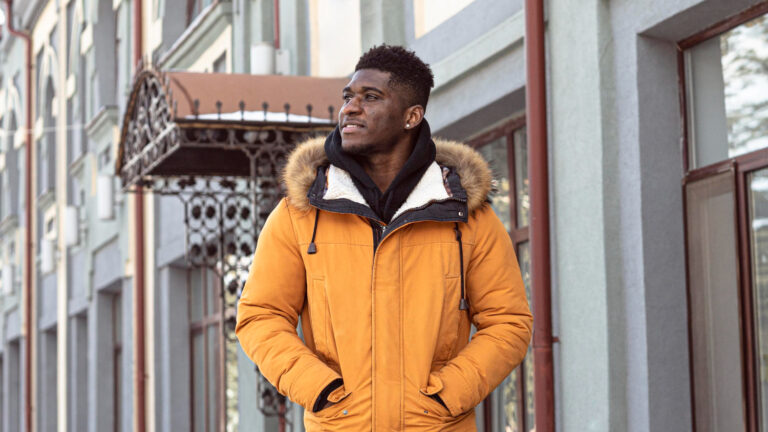
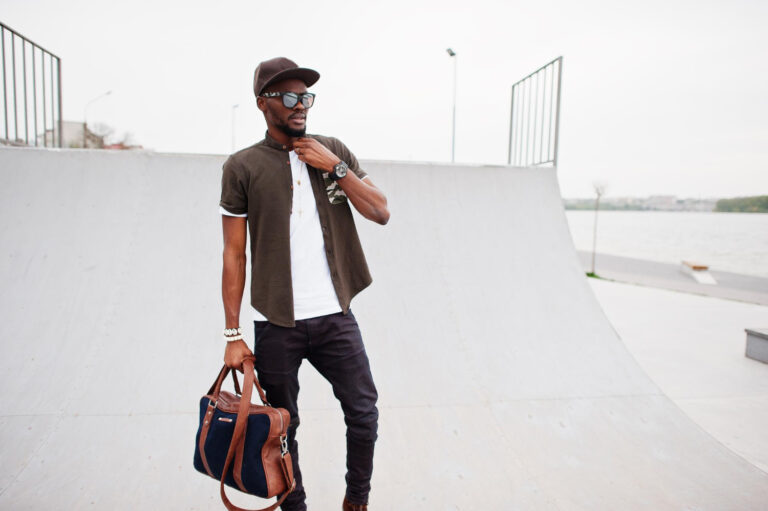
Outfit example: A well-fitted crewneck sweater in navy, straight-leg dark denim, and clean white leather sneakers or suede desert boots. Add a field jacket in olive for layering.
When to wear it: Weekend errands, casual social plans, most non-office days.
Smart Casual
This is the category most men underdress or overdress for, because it sits between “casual” and “formal” without clear rules.
Outfit example: A button-up shirt (chambray or oxford cloth) tucked into chino trousers, finished with leather derby shoes or clean minimalist sneakers, and a lightweight unstructured blazer.
Common mistake: Treating “smart casual” as an excuse to wear gym clothes with a blazer thrown on top. The blazer needs to match the formality of what’s underneath — pairing it with joggers and running shoes undercuts the whole look.
Business and Business Casual
Outfit example (business casual): A tailored button-down in a solid or subtle pattern, wool trousers, a leather belt matching your shoes, and leather oxfords or loafers.
Pro tip: Match your belt and shoe leather color and finish. This is a small detail that experienced dressers notice immediately, and mismatched leather tones (e.g., a matte black belt with glossy brown shoes) reads as an oversight.
Formal Occasions
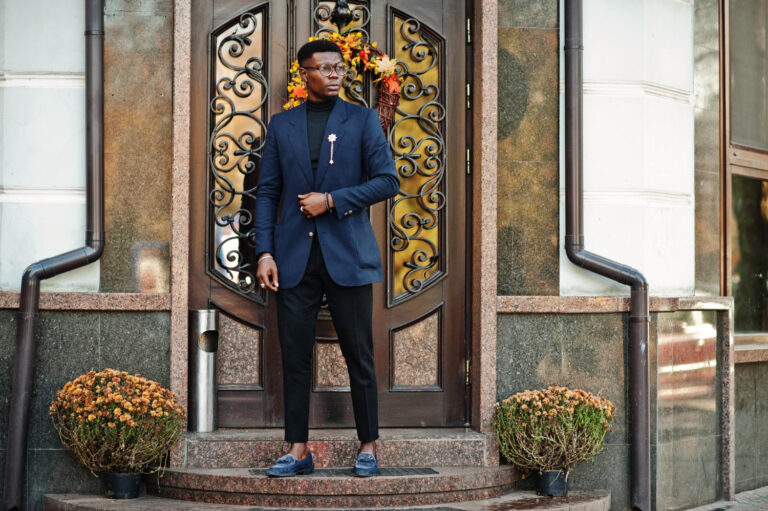
Outfit example: A well-fitted two-piece suit in navy or charcoal, a white dress shirt, a tie in a complementary but not matching color, and polished leather oxfords.
Who it suits: Weddings, interviews, formal dinners, and events specifying black-tie-adjacent dress codes (check the invitation for specifics).
Layering: The Skill That Separates Basic Outfits from Great Ones
Layering isn’t just about staying warm — it adds visual depth and makes simple outfits look considered.
A Simple Three-Layer Formula
- Base layer: T-shirt, henley, or button-up shirt.
- Mid layer: Sweater, flannel overshirt, or cardigan.
- Outer layer: Jacket, coat, or blazer.
Why This Works
Each layer should be slightly looser than the one underneath it, which prevents bulk and keeps the silhouette clean. Varying textures between layers (smooth cotton under a chunky knit, for example) adds visual interest without needing to add more colors.
Common Mistake
Layering pieces of similar bulk, which creates a stiff, padded look rather than a relaxed, tailored one.
Grooming: The Half of “Dressing Well” People Forget
Clothing is only part of how put-together someone looks. Grooming that’s inconsistent with your outfit’s effort level creates a mismatch that’s hard to place but easy to notice.
- Hair: A style that’s regularly maintained (trimmed on a consistent schedule) reads as more intentional than a specific cut.
- Facial hair: Whether clean-shaven, stubble, or a full beard, the key is clean edges and consistent length — not the style itself.
- Skin and nails: Basic upkeep (moisturizer, trimmed nails) has an outsized effect relative to the effort it takes.
- Fragrance: Apply lightly. A scent that others can smell from across a room is doing the opposite of its intended job.
Fashion Mistakes That Undercut an Otherwise Good Outfit
- Wearing clothes that are one size too big “for comfort.” This is the single most common issue and instantly ages an outfit.
- Ignoring shoe condition. Scuffed, unpolished, or worn-down shoes undercut an otherwise sharp outfit faster than almost anything else.
- Overaccessorizing. One or two accessories (a watch, a simple bracelet) read as intentional. Five reads as cluttered.
- Mismatching formality levels. Pairing dress shoes with athletic wear, or sneakers with a full suit (unless done deliberately and well), creates visual tension.
- Buying trend pieces before building a foundation. Trends fade; a strong base of well-fitted neutrals doesn’t.
Read also: How to Dress Well Without Trying Too Hard
Buying Advice: Budget vs. Premium
You don’t need to spend a lot to dress well, but knowing where to allocate a bigger budget — and where not to — makes a real difference.
| Category | Budget Approach | Premium Approach | Where to Spend More |
|---|---|---|---|
| T-shirts/basics | Solid mid-range basics (fit matters more than brand) | Higher-quality cotton with better drape | Only if budget allows — fit matters more |
| Denim | Mid-range denim with good fit | Selvedge or premium denim for durability and fade | Worth it if worn frequently |
| Outerwear | A well-fitted budget coat | Wool or technical outerwear | Yes — outerwear is worn for years and seen most |
| Shoes | Clean, well-maintained budget leather shoes | Goodyear-welted leather (resoleable, lasts longer) | Yes — cost-per-wear is excellent over years |
| Suits | Off-the-rack with tailoring | Made-to-measure | Only for frequent formal wear or one investment piece |
The general rule: Spend more on items you wear often and that are hard to replace cheaply without sacrificing fit or durability (outerwear, shoes). Spend less on trend-driven or frequently replaced basics.
Real-Life Example: Building One Week of Outfits from a Small Wardrobe
Consider a working professional with a smart-casual office and an active social life. A capable, non-redundant wardrobe might include:
- 2 pairs of trousers (navy, charcoal)
- 1 pair of dark jeans
- 4 shirts (white, light blue, one subtle pattern, one chambray)
- 2 sweaters (navy, grey)
- 1 blazer (navy, unstructured)
- 1 field jacket or overcoat depending on season
- 2 pairs of shoes (brown leather derbies, white leather sneakers)
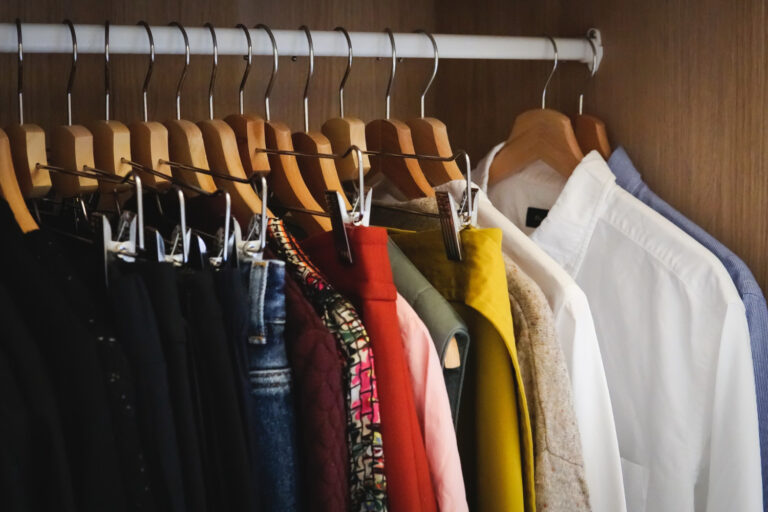
Because every neutral piece was chosen to coordinate, this list produces well over a dozen distinct, appropriate outfits — proof that a smaller, well-planned wardrobe outperforms a large, disorganized one.
Frequently Asked Questions
1. What’s the fastest way to look more put-together without buying new clothes? Get your current clothes tailored. Most fit issues (baggy torsos, long sleeves, pooling pant hems) can be fixed for a small cost and make an immediate visual difference.
2. How many colors should a men’s wardrobe have? Aim for 4–6 core colors that coordinate with each other, plus one or two accent colors used sparingly. This keeps mixing and matching simple.
3. Is it okay to wear sneakers with a blazer? Yes, when the sneakers are clean and minimal (leather or suede, low-profile) and the rest of the outfit is dressed down to match — think chinos, not tailored wool trousers.
4. How often should I replace my wardrobe basics? There’s no fixed timeline — replace items when fabric thins, color fades noticeably, or fit changes. Well-made basics in classic cuts can last many years without looking dated.
5. What’s one thing that instantly makes an outfit look cheap? Poor shoe maintenance. Scuffed or dirty shoes undercut even a well-fitted, well-coordinated outfit.
6. Do I need a tailor if I buy off-the-rack clothing? Often, yes. Off-the-rack sizing accounts for average proportions, not your specific body, so minor alterations (hemming, waist adjustments, sleeve shortening) usually improve fit significantly.
7. How do I know if my clothes are too tight or too loose? Too tight shows strain lines across buttons or seams; too loose creates excess bunched fabric, especially at the torso and sleeves. Correct fit skims the body without pulling or pooling.
8. What should I prioritize first when building a wardrobe from scratch? Fit, then neutral basics, then footwear. Trend pieces and accent colors come last, once the foundation is solid.
9. Are trends worth following? Selectively. Timeless fundamentals (fit, neutral color coordination, quality basics) matter far more long-term than seasonal trends. Adopt trends only in small doses — an accessory or a single piece — rather than rebuilding your wardrobe around them.
10. How can I dress well on a tight budget? Focus spending on fit (tailoring is cheap and high-impact) and a couple of versatile, well-maintained pairs of shoes. Budget basics in the right fit outperform expensive pieces that don’t fit well.
11. What’s the difference between “smart casual” and “business casual”? Business casual generally includes tailored trousers, collared shirts, and leather shoes with no denim or sneakers. Smart casual allows more flexibility — quality denim, sneakers, or knitwear — as long as pieces are well-fitted and coordinated.
12. How do I match a belt and shoes correctly? Match both the color and the finish (matte with matte, polished with polished) wherever possible. This small detail is one of the quickest ways to elevate a business or business-casual outfit.
Conclusion
Learning how to dress well as a man isn’t about memorizing trends or buying more clothes — it’s about applying a small number of principles consistently: prioritize fit above all else, build around a coordinated color palette, match fabric to season and occasion, and keep grooming aligned with your outfit’s effort level.
Start with what you already own. Get key pieces tailored, identify gaps in your neutral basics, and resist buying trend pieces before your foundation is solid. Small, consistent improvements — a properly hemmed pair of trousers, well-maintained shoes, a slightly better-fitted shirt — compound into a noticeably more polished appearance over time.
Dressing well is a skill, not a talent, and like any skill, it improves with a clear framework and steady practice.
Read also: